
24 Hour Heater Repair Near Me: Emergency Steps & Costs
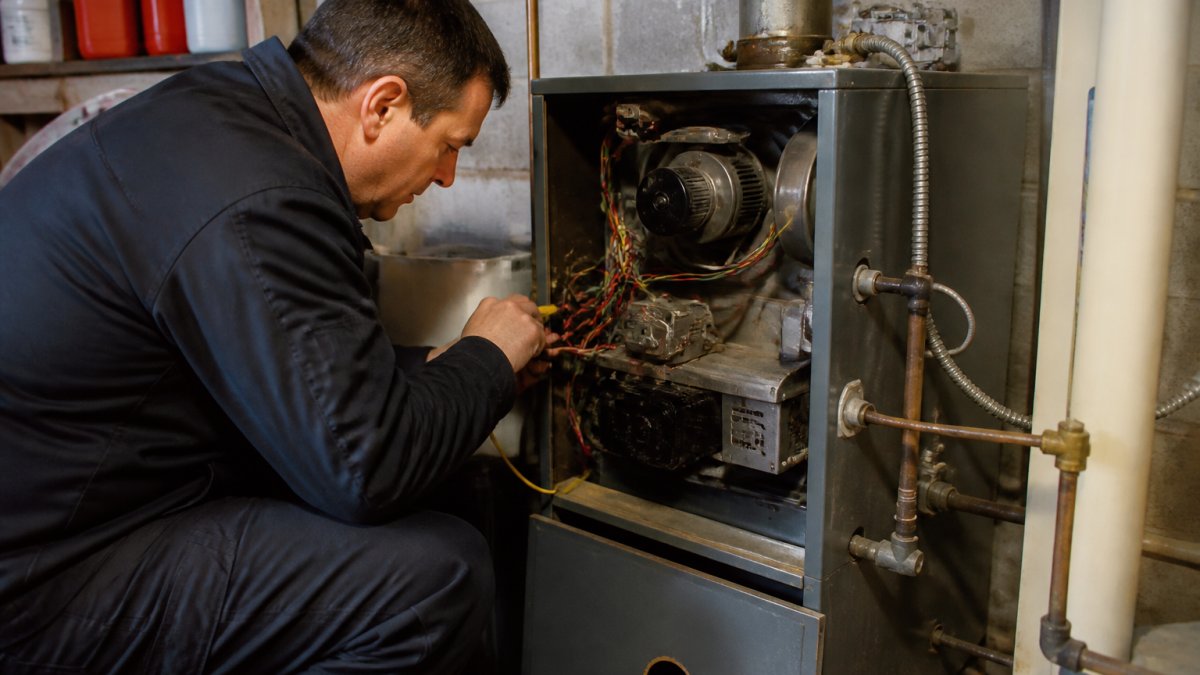
Table of Contents
- 24 Hour Heater Repair Near Me: What to Do When the Heat Fails
- When a No-Heat Call Is an Immediate Safety Emergency
- Furnace Troubleshooting You Can Safely Do Before Calling
- Same-Day Heating Repair: How Fast Response Actually Works
- Heater Repair Cost: What Drives the Bill Up or Down
- Furnace Service Call Cost and After-Hours Fees Explained
- How to Choose and Verify an Emergency Technician
- Repair or Replace? Deciding Before the Technician Arrives
- Preparing for the Service Call and Requesting Service
- Frequently Asked Questions
Last Updated: October 17, 2026
24 Hour Heater Repair Near Me: What to Do When the Heat Fails
When your heat dies at 2 a.m., first confirm whether you have a true no-heat emergency, then call a 24 hour heater repair near me service that actually staffs overnight calls. At Whole Home Comfort Systems, we answer around the clock because a failed furnace in January is not a morning problem. Below: what you can safely check yourself, what a real emergency looks like, what drives heater repair cost, and how to verify the technician at your door.
Start with one question: is everyone in the home safe and warm enough to wait an hour? If yes, you have time to troubleshoot. If no, skip ahead.
When a No-Heat Call Is an Immediate Safety Emergency
A no-heat call becomes an immediate emergency when you smell gas, hear a loud bang or booming from the unit, see soot or scorch marks, or notice a yellow, lazy flame instead of a crisp blue one. Those signals point to combustion problems that need a licensed technician now, not in the morning.
Other triggers for an emergency appointment:
- Carbon monoxide alarms sounding. Get everyone outside and call from a safe location.
- No heat plus no hot water on a gas or oil system. This often points to a shared ignition or fuel problem.
- Frozen pipes risk. In a hard freeze, a cold house can turn into a burst-pipe repair within hours.
- Anyone in the home who is elderly, an infant, or medically fragile.
Furnace Troubleshooting You Can Safely Do Before Calling
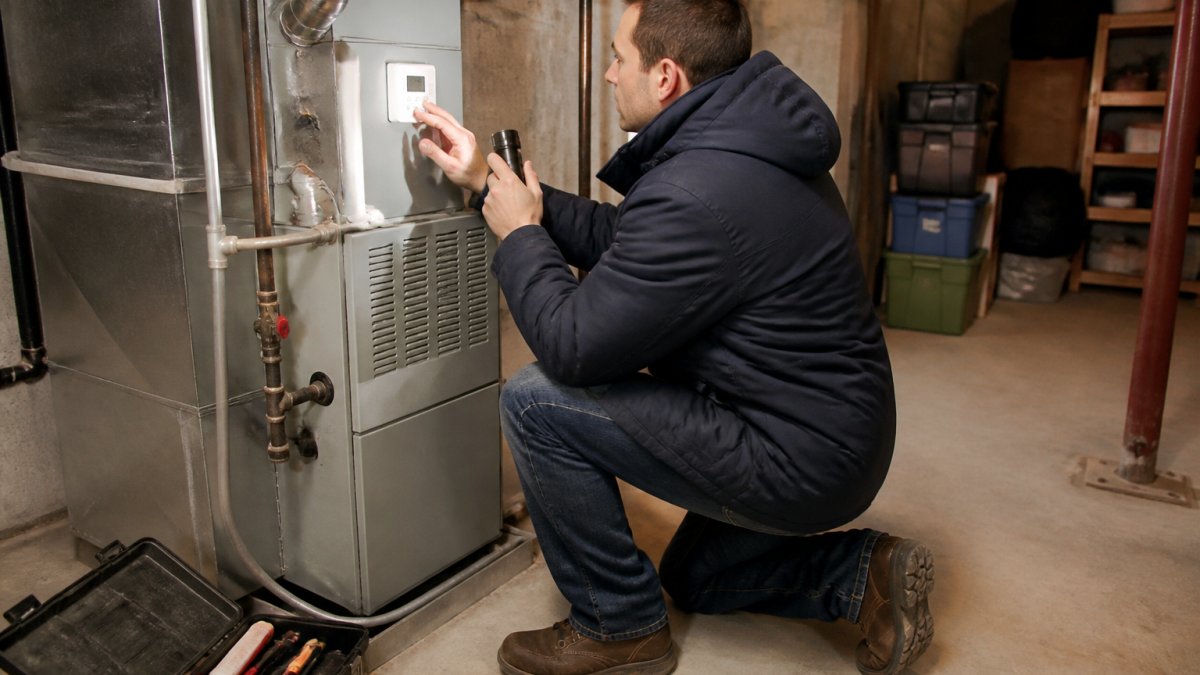
Before you dial, run a five-minute furnace troubleshooting pass. Most no-heat calls we roll on turn out to be simple: a tripped breaker, a thermostat set to "cool," a closed fuel valve, or a clogged filter choking airflow.
What to Check and What to Leave Alone
Safe to check:
- Thermostat. Confirm it is set to heat and the setpoint is above room temperature. Replace batteries if the display is blank.
- Breaker. Look for a tripped breaker at the panel and reset it once.
- Filter. A heavily clogged filter can trip a high-limit switch and shut the system down.
- Fuel supply. Confirm the gas valve is open or the oil tank has fuel.
- Air registers. Make sure returns and supplies are not blocked by furniture or rugs.
Leave alone: the heat exchanger, the gas valve itself, electrical components inside the cabinet, and anything involving fuel lines. Those require a licensed technician and, on gas equipment, a permit in many jurisdictions.
Same-Day Heating Repair: How Fast Response Actually Works
Same-day heating repair depends on when you call, what parts your system needs, and whether the company keeps technicians on call overnight. A well-run shop triages no-heat calls first, because heat loss is time-sensitive in a way a noisy condenser is not.
Here is what realistic timing looks like:
| Call Type | Typical Dispatch Window | What Affects It |
|---|---|---|
| Overnight emergency, no heat | Fastest priority | Technician on call, parts on truck |
| Weekend no-heat call | Same day | Weekend staffing levels |
| Weekday routine repair | Same or next day | Morning vs. afternoon booking |
| Parts-dependent repair | Return visit | Whether the part is stocked locally |
The honest answer: no company can promise a 30-minute arrival in a snowstorm. What they can promise is a real person answering the phone and a realistic arrival window. Ask for that window before you hang up.
What Happens During a 24-Hour Repair Visit
A 24-hour repair visit follows a predictable path. The technician confirms the no-heat complaint and runs a diagnostic covering ignition, fuel pressure, airflow, and safety switches. You get a repair estimate before any work begins. Common failures like an ignitor, flame sensor, or blower capacitor are often on the truck; if not, you get a clear plan for the return trip.
Expect the technician to test the system after the repair and show you the readings. A good tech walks you through what failed and why.
Heater Repair Cost: What Drives the Bill Up or Down
Heater repair cost depends on the diagnosis, the parts, and the labor hours, not a flat menu price. Two furnaces with the same symptom can land in very different places once the technician opens the cabinet. Read a heating bill in four buckets: diagnostic or trip charge, after-hours premium, parts, and labor. Most homeowners only see the total, which is why surprise bills happen.
A typical structure looks like this:
| Cost Component | What It Covers | What to Ask |
|---|---|---|
| Diagnostic / trip charge | Technician travel and initial diagnosis | Is it waived or credited if I approve the repair? |
| After-hours premium | Overnight, weekend, or holiday dispatch | Is it a flat fee or a percentage of the bill? |
| Parts | Ignitor, flame sensor, control board, blower motor, etc. | Is the part stocked locally or ordered? |
| Labor | Time to diagnose, install, and test | Is labor billed hourly or as a flat repair price? |
What pushes the bill up:
- Failed heat exchanger. A cracked exchanger is a safety issue and often a replace-not-repair call.
- Control board or blower motor failure. Parts cost more and take longer to install.
- Older oil equipment. Parts availability is thinner and labor runs longer.
- After-hours timing. Emergency calls usually carry a premium, and the premium should be disclosed before dispatch.
- Return visits for ordered parts. A second trip can add a second trip charge unless the company waives it.
What keeps it down:
- A simple sensor or ignitor swap. These are common failures and often carried on the truck.
- A clogged filter or blocked vent that a tune-up would have caught.
- Calling during regular hours when the problem is not urgent.
- Approving a written estimate before work starts so the scope does not drift.
We quote before we start. If the diagnosis changes mid-repair, you hear about it before we touch anything else. Ask for the estimate in writing, with parts and labor separated, and confirm whether the diagnostic fee is credited toward the repair. Those two questions alone prevent most billing disputes.
Furnace Service Call Cost and After-Hours Fees Explained
A furnace service call cost typically has two parts: a diagnostic or trip charge and the repair itself. After-hours fees are a separate line and should be disclosed on the phone, not on the invoice.
Ask three questions when you call:
- What is the diagnostic fee, and does it apply toward the repair?
- Is there an after-hours or weekend premium, and how much is it?
- Will I get a written estimate before work starts?
If a company will not answer those three questions up front, that is your signal to call someone else. Transparent emergency pricing is not a marketing line, it is a policy. You can review current rates on our Whole Home Comfort Systems pricing page before you book.
How to Choose and Verify an Emergency Technician
Verify an emergency technician before you let them in the door. Ask for the license number, confirm the company carries insurance, and check that the technician is certified for the fuel type in your home.
A short verification checklist:
- State HVAC or oil burner license number, verifiable with the state licensing board
- Proof of liability insurance and workers' compensation
- EPA Section 608 certification for refrigerant handling (the EPA)
- A local address and a real phone number, not just a web form
- Written estimate before work begins
- Warranty terms on parts and labor, in writing
Whole Home Comfort Systems is locally owned and owner-operated, licensed and fully insured, with oil burner and EPA 608 credentials. We have served homeowners in this area for over 20 years, and we stand behind the work.
Repair or Replace? Deciding Before the Technician Arrives
Repair or replace comes down to more than age. Weigh four factors together: system age, repair cost relative to replacement, safety of the failed part, and how often major repairs have been needed. A heat exchanger crack is almost always a replace call because it is a safety issue. A failed ignitor on a ten-year-old furnace is almost always a repair.
Use this decision framework as a starting point, then confirm with the technician's readings:
| Situation | Lean Toward | Why |
|---|---|---|
| Unit under 10 years, single part failure | Repair | Remaining life is long; repair cost is a small fraction of replacement |
| Unit over 15 years, second major repair | Replace | Repeat failures signal end of useful life |
| Cracked heat exchanger or CO risk | Replace | Safety issue; repair is not a reliable fix |
| Repair cost approaching half of replacement | Replace | Money spent does not buy proportional remaining life |
| Well-maintained unit with a minor sensor fault | Repair | Low-cost fix on a system with life left |
| Rising energy bills with an older unit | Weigh replace | Efficiency gains can offset part of the cost over time |
Three questions to ask the technician before you decide:
- What is the repair cost, and what is the replacement cost, in writing? You should get both numbers, not just the one the company prefers to sell.
- What is the remaining expected life of this system? Age, maintenance history, and part availability all matter.
- Is the failed part a safety component? Heat exchangers, venting, and gas valves are safety-critical; sensors and ignitors usually are not.
The technician should give you both numbers so you can decide with real figures instead of a sales pitch. If a company will only quote replacement, ask why, and get a second opinion before you sign.
Preparing for the Service Call and Requesting Service
Preparing for the service call saves time and money. Clear a path to the furnace or boiler, move stored items away, and make sure the technician can reach the breaker panel and fuel shutoff. Secure pets before the tech arrives.
Have these ready:
- The furnace or boiler model and serial number
- A short description of the symptoms and when they started
- Any recent repairs or maintenance history
- Your thermostat settings and whether you have hot water
To request service, call our line any hour and a real person will take your details. We confirm an arrival window, dispatch a local technician, and give you a written estimate before work begins. If it is a no-cool call in summer, the same process applies to air conditioning repair.
A cold house in the middle of a winter night is stressful, and the last thing you need is a company that promises same-day service and then leaves you waiting. Whole Home Comfort Systems answers the phone around the clock, dispatches a licensed local technician with a real arrival window, and quotes the repair before any work starts. Our team handles oil and gas furnaces, boilers, and full heating and cooling systems, backed by over 20 years of local experience and no surprise costs. Request service with Whole Home Comfort Systems and get your heat back on with a clear plan and a fair quote.
Frequently Asked Questions
Who should I call when my heat is not working?
Call a licensed heating contractor that offers 24-hour emergency service, not a general handyman. Whole Home Comfort Systems is MA licensed, fully insured, and EPA 608 certified, with technicians available around the clock for no-heat calls. Before you call, note your fuel type (oil or gas), the furnace or boiler make and model, and any error codes on the display. That information speeds up the diagnostic visit and helps the dispatcher send the right technician with the right parts.
How much does a furnace service call cost?
A furnace service call cost depends on the time of day, the fuel type, and whether the visit is a routine diagnostic or an after-hours emergency. Whole Home Comfort Systems provides a clear quote before work begins, so you know the diagnostic visit fee and any after-hours charge up front. Ask for that number on the phone before you book, and confirm whether the diagnostic fee is credited toward the repair.
What should I check before calling for emergency heater repair?
Run safe furnace troubleshooting first: confirm the thermostat is set to heat and above room temperature, check that the breaker or emergency switch is on, replace a dead thermostat battery, and verify the furnace filter is not clogged. For gas units, confirm the gas valve is open. If you smell gas or see soot, flames, or water around the unit, stop and call for emergency heater repair immediately rather than troubleshooting further.
Is it safe to run a furnace that is not heating properly?
No. A furnace that short-cycles, blows cold air, or produces soot, strange smells, or yellow flames should be shut off at the thermostat and switch until a technician inspects it. Those symptoms can point to a cracked heat exchanger, blocked flue, or combustion problem, and the EPA and Consumer Product Safety Commission tie those faults to carbon monoxide risk. Get everyone out and call for emergency service if a carbon monoxide alarm sounds.
Need HVAC service in Mansfield, MA?