
5 Causes of Central AC Blowing Warm Air
Last Updated: November 1, 2026
Quick Summary
AC blowing warm air is almost always caused by one of five things: a dirty air filter restricting airflow, wrong thermostat settings, low refrigerant from a leak, a blocked outdoor condenser unit, or a frozen evaporator coil with compressor or electrical faults. Check the thermostat and filter first, since those are the cheapest DIY fixes.
- Check your air filter monthly during cooling season and replace it when it looks dirty.
- Confirm the thermostat is in cool mode with a setpoint below room temperature.
- Refrigerant handling requires EPA 608 certification, so leaks need a licensed tech.
- Clear two feet of space around the outdoor unit and rinse the coil fins gently.
- If you see ice, turn the system off at the thermostat and let it thaw.
Table of Contents
- The Five Causes of Central AC Blowing Warm Air
- How to Fix AC Blowing Warm Air: Safe Diagnostic Steps
- AC Not Cooling Troubleshooting: Match the Symptom to the Cause
- AC Refrigerant Leak Symptoms You Should Never Ignore
- When to Stop Troubleshooting and Call for Repair
- Preventing Warm Air: A Maintenance Schedule That Works
- Request Service for Your Warm-Air AC Problem
- Frequently Asked Questions
The Five Causes of Central AC Blowing Warm Air
When your AC blowing warm air turns a normal summer afternoon into a sweat-fest, the cause is almost always one of five things. Across years of working on South Shore homes, the same handful of culprits show up again and again. A central air conditioner is a closed loop: it pulls heat out of your home and dumps it outside. Anything that blocks airflow, starves the system of refrigerant, or breaks the electrical chain stops that heat transfer cold. Here are the five causes, in the order we check them.
Cause 1: Dirty Air Filters and Restricted Airflow
A clogged filter is the most common and cheapest fix on this list. When the filter loads up with dust, the blower can't pull enough air across the evaporator coil. The coil gets too cold, frosts over, and stops cooling. Check your filter monthly during cooling season and replace it when it looks dirty. Hold it up to a light; if you can't see through it, replace it.
Cause 2: Thermostat Settings and Malfunctions
A thermostat set to "heat," "fan only," or a setpoint above room temperature will blow room-temperature air all day. Confirm it's in cool mode and the setpoint is below the current reading. Then check the batteries and the breaker at the air handler. A misconfigured or dead thermostat looks exactly like a broken AC, so rule it out before anything else.
Cause 3: Low Refrigerant or a Refrigerant Leak
Refrigerant doesn't get "used up." If the level is low, it leaked out somewhere. Low refrigerant means the system can't absorb heat, so the air coming out of your vents feels lukewarm. Signs include ice on the copper lines, a hissing sound, and a system that runs nonstop without cooling. This one needs a licensed tech, since handling refrigerant requires EPA 608 certification.
Cause 4: A Blocked or Dirty Outdoor Condenser Unit
The outdoor unit dumps heat. If it's crowded by shrubs, buried in leaves, or caked with dirt and debris, it can't shed that heat and the whole system backs up. Keep clear space around the condensing unit. Rinse the coil fins gently with a hose, and clear grass clippings and cottonwood fluff from the top grille.
Cause 5: Frozen Evaporator Coil, Compressor, or Electrical Faults
A frozen evaporator coil blocks airflow completely, and you'll see ice on the indoor unit or the refrigerant lines. Behind that, a failing compressor or an electrical issue like a tripped breaker or blown capacitor can shut cooling down entirely. If you see ice, turn the system off at the thermostat and let it thaw before calling anyone.
| Cause | Typical Symptom | DIY or Pro? |
|---|---|---|
| Dirty filter | Weak airflow, mild air | DIY |
| Thermostat | Fan runs, no cooling | DIY |
| Low refrigerant | Ice on lines, hissing | Pro |
| Blocked outdoor unit | Hot air, unit runs hard | DIY |
| Frozen coil or electrical | Ice indoors, no fan | Pro |
How to Fix AC Blowing Warm Air: Safe Diagnostic Steps
Here's how to troubleshoot AC blowing warm air safely. Work through these steps in order, and stop the moment you hit something that needs a licensed tech.
- Check the thermostat. Confirm cool mode, a setpoint below room temp, and fresh batteries.
- Inspect the filter. Replace it if it's gray or clogged.
- Look at the outdoor unit. Clear debris and give it two feet of breathing room.
- Check the breaker. Reset a tripped breaker once. If it trips again, stop and call.
- Feel the vents. Weak airflow points to a filter or blower problem. No airflow at all points to electrical.
- Look for ice. Ice on the indoor coil or lines means shut the system off and let it thaw.
Watch out: never open the electrical panel or add refrigerant yourself. Those tasks carry safety risks, and a wrong move can make a repair more costly.
AC Not Cooling Troubleshooting: Match the Symptom to the Cause
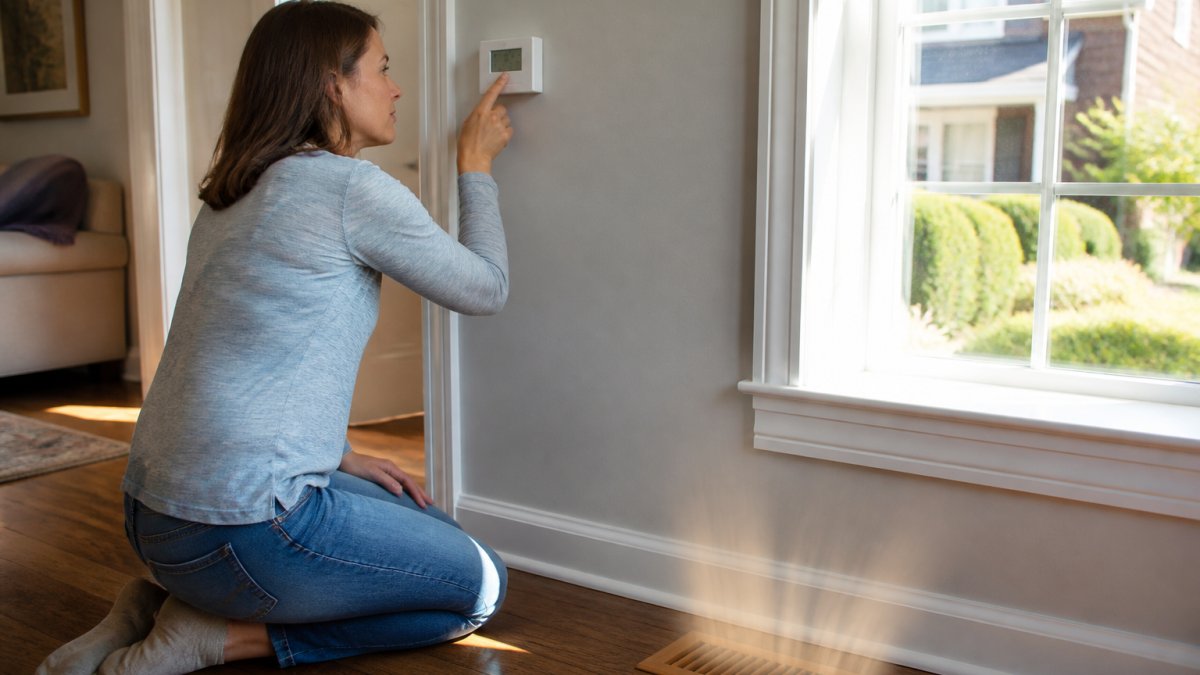
Matching the symptom to the cause can help you narrow the problem before you touch anything. Each entry below explains why that symptom points to that cause and the safe next step.
- Weak airflow and air that is merely mild, not cold: dirty filter or restricted return airflow. A loaded filter starves the evaporator coil of warm indoor air, so the coil runs colder than it should, frosts, and stops transferring heat. Safe next step: replace the filter, confirm all supply and return registers are open and unblocked, then recheck after 30 minutes.
- Blower runs, vents move air, but it never cools: thermostat mode or setpoint, or a tripped breaker at the air handler. If the thermostat is in fan-only or heat mode, or the setpoint sits above room temperature, the compressor never gets a call to run. Safe next step: confirm cool mode and a setpoint below room temperature, replace thermostat batteries, and reset a tripped breaker once.
- Ice on the indoor unit, copper lines, or the outdoor unit: frozen evaporator coil, usually driven by restricted airflow or low refrigerant. Ice insulates the coil and blocks heat transfer, so the system runs but delivers warm air. Safe next step: turn the system off at the thermostat, switch the fan to on to thaw faster, and do not run cooling again until the ice is gone. If ice returns after a filter change, treat it as a refrigerant or metering-device issue and call a licensed tech.
If your AC will not turn on at all, our 5 ways to troubleshoot central AC not turning on walks through the startup checks in order.
AC Refrigerant Leak Symptoms You Should Never Ignore
Refrigerant leak symptoms show up long before the system dies. Catch them early and you avoid a compressor replacement. Watch for:
- Ice on the copper lines or indoor coil
- A hissing or bubbling sound near the lines
- Air that's cool at first, then warm
Refrigerant leaks don't fix themselves, and topping off a leaking system just delays the real repair. A licensed tech finds the leak, repairs it, then recharges to the correct level. The EPA's refrigerant handling rules require certified technicians for this work.
When to Stop Troubleshooting and Call for Repair
Some problems are safe to fix yourself. Others need a pro, and knowing the difference protects your home, your equipment, and your wallet. Use the tiers below to decide how fast to act. The rule of thumb: if the symptom involves ice, refrigerant, burning smells, or repeated breaker trips, stop running the system and call.
Stop use immediately and call for service:
- Ice on the indoor coil, copper lines, or outdoor unit that returns after a filter change. Running a frosted system can damage the compressor. Turn the system off at the thermostat and leave the fan on to thaw.
- A burning smell, scorched wiring smell, or visible smoke at the air handler or outdoor unit. This points to an electrical fault and is a fire risk. Shut the system off at the breaker and call.
- A breaker that trips more than once. A breaker that trips again after one reset is telling you there is a fault, do not keep resetting it.
Schedule service within a few days:
- Weak airflow that persists after a filter change and open registers
- Short cycling, the system runs a few minutes, shuts off, and repeats
- The system runs nonstop without reaching the setpoint
Safe to handle yourself:
- Replacing a clogged filter
- Confirming thermostat mode, setpoint, and batteries
- Clearing two feet of clearance around the outdoor unit and rinsing the coil fins gently
Repair versus replace. Repair versus replacement depends on the system's age, the cost of the repair, and its overall condition. A technician should give you a written quote that separates the diagnostic fee, parts, and labor so you can compare. Our guide to central AC repair cost and pricing explains what drives quotes, diagnostic fees, and when repair beats replacement. We provide quote-based pricing, so you can review the number before work begins.
Preventing Warm Air: A Maintenance Schedule That Works
Many warm-air problems are preventable with regular maintenance. A simple seasonal schedule keeps your system cooling when you need it:
- Monthly: check and replace the air filter
- Spring: schedule a professional tune-up before the first heat wave
- Monthly in summer: clear debris from the outdoor unit
Seasonal tune-ups catch small issues before they become emergency repairs. Our seasonal HVAC tune-up guide breaks down exactly what to check and when to schedule it. For homeowners who've skipped maintenance for years, it's generally worth starting now, and a tune-up can help identify where your system stands.
Request Service for Your Warm-Air AC Problem
Warm air from your vents is a problem you don't have to solve alone. At Oil gas heating ac cooling service and installation, we handle central AC repair, tune-ups, and 24/7 emergency service for homeowners across Mansfield and the South Shore. We're MA licensed, fully insured, EPA 608 certified, and oil burner licensed, and we provide quote-based pricing. You can explore our AC repair and tune-up services or get in touch to schedule a diagnosis.
Frequently Asked Questions
Why would my AC be blowing out warm air?
Most warm-air complaints trace to one of five causes: a clogged air filter restricting airflow, a thermostat set to heat or fan mode, low refrigerant from a leak, a dirty outdoor condenser coil, or a mechanical fault like a frozen evaporator coil or failing compressor. Start with the filter and thermostat, since those are the two you can check safely yourself. If both look fine and the air stays warm after 15 minutes, the problem is likely refrigerant or a component failure that needs a licensed technician.
Can a dirty air filter make central AC blow warm air?
Yes. A clogged filter chokes airflow across the evaporator coil, so the coil gets too cold and can freeze into a block of ice. Once that happens, little or no cooled air reaches your vents and the system blows warm. Check the filter monthly during cooling season and replace it when it looks dirty. If you find ice on the indoor coil or refrigerant lines, switch the AC off, let it thaw, and have a technician check the system before restarting.
How can I tell if my central AC is low on refrigerant?
Watch for these AC refrigerant leak symptoms: weak cooling that never fully satisfies the thermostat, ice buildup on the indoor coil or the copper lines, a hissing or bubbling sound near the lines, and higher electric bills without a change in use. Refrigerant does not get used up like fuel, so low levels always mean a leak. Recharging without finding and sealing the leak just delays the problem. An EPA 608 certified technician can pressure-test the system and locate the source.
Should I turn off the AC if it is blowing warm air?
Turn it off if you see ice on the indoor unit or refrigerant lines, hear grinding or clicking from the outdoor unit, or smell burning. Running a frozen or failing system can damage the compressor, which is the most expensive part to replace. If the air is simply warm with no other symptoms, you can leave it on briefly while you check the filter and thermostat. When in doubt, shut it down at the thermostat and request service rather than risk a larger repair bill.

Need HVAC service in Mansfield, MA?