
How Do You Bleed Air From a Hot Water Radiator?
Last Updated: November 2, 2026
Quick Summary
To bleed air from a hot water radiator, turn the heating off and let it cool, then place a bowl and rag beneath the bleed valve at the top corner. Turn the valve slowly anti-clockwise with a radiator key until water appears, then close it tightly. Repeat this bleed air radiator process on any radiator that stays cold at the top.
- Turn the heating off and let the radiator cool completely before touching the valve.
- Turn the bleed valve slowly anti-clockwise about a quarter turn and listen for hissing.
- Close the valve as soon as a steady stream of water appears, without over-tightening.
- Check boiler pressure afterward, since releasing water lowers system pressure.
- If air keeps returning, call a technician to check for leaks or a faulty vent.
Table of Contents
- How to Tell a Hot Water Radiator Has Trapped Air
- Tools You Need and Preparing the Radiator Safely
- How to Bleed a Hot Water Radiator Step by Step
- Bleeding a Baseboard Heater: What Changes
- Checking Boiler Pressure After Bleeding Radiators
- When Air Keeps Coming Back or Water Will Not Appear
- Booking a Heating Check If the Problem Persists
- Frequently Asked Questions
How to Tell a Hot Water Radiator Has Trapped Air
Cold spots at the top of a bleed air radiator are the most common sign of trapped air. When a radiator is hot at the bottom and cool near the top, air is likely stuck inside. Air rises and collects at the high point of the radiator, where it blocks hot water from flowing through.
Other signs point the same way. You may hear gurgling or knocking when the heat comes on. Some rooms may feel warm while others stay cold, even though the thermostat is set correctly. Bleeding the radiator is usually the fix. This works on most hot-water heating systems, including cast-iron radiators with a bleed valve.
Watch out: Do not assume a cold top means you need a new boiler. Trapped air is the cause in most cases, and it is a quick fix.
Tools You Need and Preparing the Radiator Safely
Gather these items before you start:
- A radiator key sized for your bleed valve, or a flathead screwdriver if the valve has a slot
- A clean rag or towel
- A small bowl or shallow container to catch water
- Gloves to protect your hands from hot water and sharp valve edges
- A flashlight if the valve is in a dim corner
Safe Preparation for a Hot-Water System
Turn the heating off at the thermostat and let the radiator cool completely before you touch the valve. Hot water in a residential hydronic system can be 120°F to 180°F or higher, and a sudden spray from an opened bleed valve can scald. Waiting until the radiator is cool to the touch is the simplest safeguard.
Place a towel on the floor under the valve and set the bowl directly beneath it. Clear the area so you can kneel and move freely. If the radiator sits against carpet or hardwood, add a second towel or a shallow tray to catch drips that miss the bowl.
Know Which Valve You Are Opening
Before you turn anything, confirm you are at the bleed valve and not a system valve. The bleed valve is a small square or slotted nut at the top corner of the radiator, usually opposite the pipe connections. A larger valve on the supply pipe or at the boiler is a system component, not a bleed point. Opening the wrong valve can drain the system or introduce air rather than remove it.
If your radiator has no standard bleed valve, or the valve is stuck, damaged, or rounded off, stop and call a technician. Forcing a stuck valve can break it and cause a leak that requires shutting down the system.
How to Bleed a Hot Water Radiator Step by Step
Work through these steps in order. The whole process usually takes about 5 to 10 minutes per radiator.
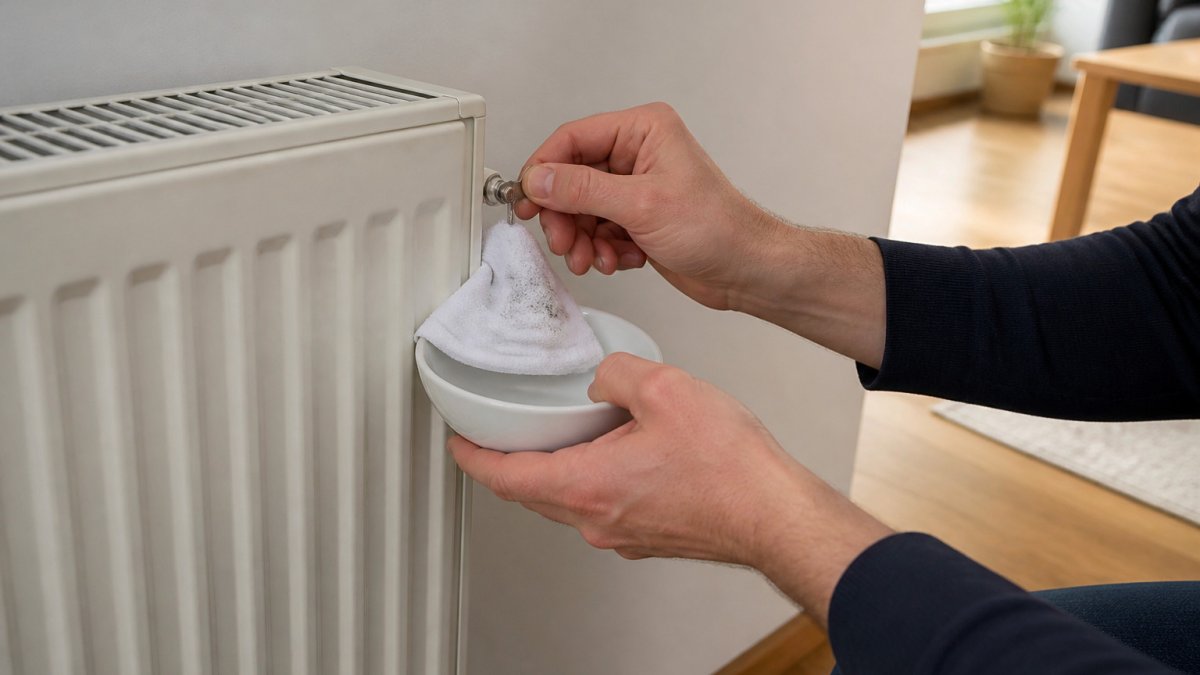
- Turn the heating off and wait until the radiator is cool.
- Place the bowl and rag beneath the bleed valve.
- Insert the key into the valve.
- Turn it slowly anti-clockwise, about a quarter turn.
- Listen for hissing as the air escapes.
- Close the valve once water starts to appear.
- Check the radiator warms evenly from top to bottom.
Locating the Bleed Valve on Your Radiator
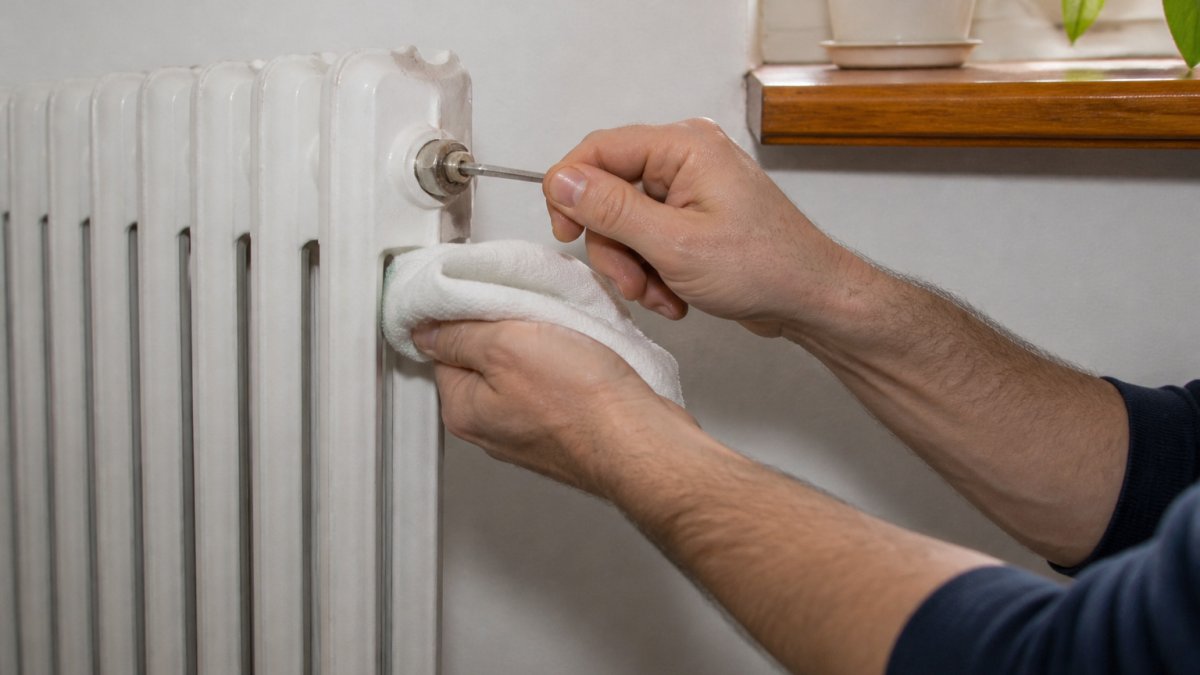
The bleed valve is usually at the top corner of the radiator, on the side opposite the pipe connections. It is a small square or slotted nut. Some radiators have it on the top edge instead. Look for it before you turn anything.
Releasing Air Until Water Appears
Turn the key slowly and keep the rag ready to catch drips. Let the air hiss out. Once a steady stream of water comes out, close the valve tightly. Do not over-tighten it, or you may strip the threads.
A common mistake is opening the valve too far. This can release water quickly and make a mess. Go slowly and close it as soon as water appears.
The steps below walk through the bleeding process, with the time each step takes.
| Step | What to do | Time or frequency |
|---|---|---|
| Cool down | Turn heating off and let the radiator cool completely | Until cool to the touch |
| Set up | Place bowl and rag beneath the bleed valve | Before opening the valve |
| Open valve | Turn key slowly anti-clockwise about a quarter turn | Slowly |
| Release air | Listen for hissing as air escapes | Until water appears |
| Close valve | Close once a steady stream of water comes out | As soon as water appears |
| Check | Confirm the radiator warms evenly from top to bottom | After bleeding |
| Overall | Complete the full bleed process on one radiator | About 5 to 10 minutes per radiator |
Bleeding a Baseboard Heater: What Changes
Baseboard heaters work differently from radiators. Many use a small air bleeder on one end or a valve on the top of the element. Some models have no bleed valve at all. Check the unit first. If you find one, follow the same steps: cool it down, catch any water, and turn the valve anti-clockwise to release air.
If your baseboard heater has no valve, the system may need a professional to purge air from the loop.
Checking Boiler Pressure After Bleeding Radiators
Releasing water from a radiator lowers system pressure. Look at the boiler pressure gauge after you finish. Seasonal HVAC tune-ups explain how regular checks keep your system efficient. Most residential hot-water systems run best at roughly 12 to 15 PSI when cold. Check your boiler's manual for the exact range.
If the pressure drops below the recommended level, you may need to add water through the fill valve. Do this carefully and follow the manufacturer's instructions. If you are unsure, call a professional before adding water.
When Air Keeps Coming Back or Water Will Not Appear
Bleeding removes air that is already trapped in a radiator. It does not fix the reason air keeps entering the system. If air returns within a few days or weeks, work through the likely causes below before you bleed again.
Diagnosing Recurring Air and Cold Spots
- Air returns quickly after bleeding. A small leak somewhere in the loop, a failing automatic air vent, or a pump that is pulling air in can keep introducing air. A technician can pressure-test the system and check the vent and pump.
- Cold spots stay at the bottom of the radiator. Air collects at the high point, so a cold bottom more often points to sludge, sediment, or a circulation problem than to trapped air. Bleeding will not clear it.
- One zone or room stays cold while others heat. This can be a balancing issue, a stuck zone valve, or a circulator problem rather than air in a single radiator.
- No water appears when you open the valve. The radiator may be blocked, the valve may be clogged, or the system may not be circulating. Close the valve and have the system checked rather than opening it further.
- Gurgling continues after bleeding. Air may be trapped elsewhere in the loop, such as at a high point in the piping or at the boiler, which is a system-level purge rather than a radiator bleed.
Bleeding a Radiator vs. Purging the System
These are different jobs, and mixing them up is a common source of trouble. Bleeding opens the small valve at the top of one radiator to release air trapped there. Purging removes air from the boiler, piping, baseboard loops, or an entire zone, and it usually involves system valves, a drain, and sometimes a fill connection.
If your baseboard heater or boiler has no bleed valve, or if multiple radiators across a zone stay cold, the fix is likely a system purge, not a radiator bleed. Purging a hydronic loop requires knowing the system layout and the correct valve sequence. If you are not sure which procedure applies, stop and have a technician identify the system type before you open any valve.
When to Call a Technician
Call a professional if air keeps returning, if no water appears at the valve, if you see leaks or corrosion around the valve or pipes, or if the boiler pressure will not hold after bleeding. A technician can check for leaks, test system pressure, inspect the automatic air vents and circulator, and determine whether the boiler needs service. Neglected maintenance is a common reason air and cold spots keep coming back. Boiler maintenance after years covers what is safe to check yourself and when to call a professional.
Booking a Heating Check If the Problem Persists
If your radiators still will not heat evenly after bleeding, our team can help. Browse our furnace, boiler, and AC services to see what we install and repair in Mansfield. Our team handles furnaces, boilers, and radiator systems across Mansfield and the South Shore, and we will explain the cost of any work before it begins.
Get in touch for a quote to schedule a heating check.
Frequently Asked Questions
How do you bleed a hot water radiator?
Turn off the heating and let the radiator cool. Fit a radiator key to the bleed valve, usually at the top corner on the opposite end from the supply valve. Hold a cloth or small container underneath, then turn the key anti-clockwise a quarter turn. Let air hiss out until a steady stream of water appears, then close the valve firmly. Check the radiator warms evenly once the heating is back on. Wipe up any drips before restarting the system.
Should the boiler be on or off when bleeding a radiator?
Turn the boiler off before you start and let the radiator cool, because the water inside can be hot enough to scald. Trapped air often causes the radiator to run cold at the top, so you should bleed it once it has cooled. After you finish, turn the heating back on and watch the radiator warm up. If the boiler has been off for a long time, check its pressure gauge before restarting it.
What should you do if water does not come out after bleeding a radiator?
If you hear air hissing but no water appears, the radiator may simply have a lot of air in it, so keep the valve open a little longer. If nothing comes out at all, the valve may be blocked or the system may be low on water. Check the boiler pressure gauge and top up if needed. If the problem continues or you smell gas, turn off the boiler and call a licensed heating professional right away.
Do all hot water radiators have bleeder valves?
Most standard hot water radiators have a bleed valve, usually at the top on one end. Some older or specialty radiators do not, and some designs hide the valve behind a cover or on the bottom. Baseboard heaters often have a bleed valve on the end of the fin tube, but not always. If you cannot find one, a heating professional can tell you whether the radiator can be bled or needs another approach.

Need HVAC service in Mansfield, MA?