
Boiler Maintenance After Years: A Safe Homeowner's Guide
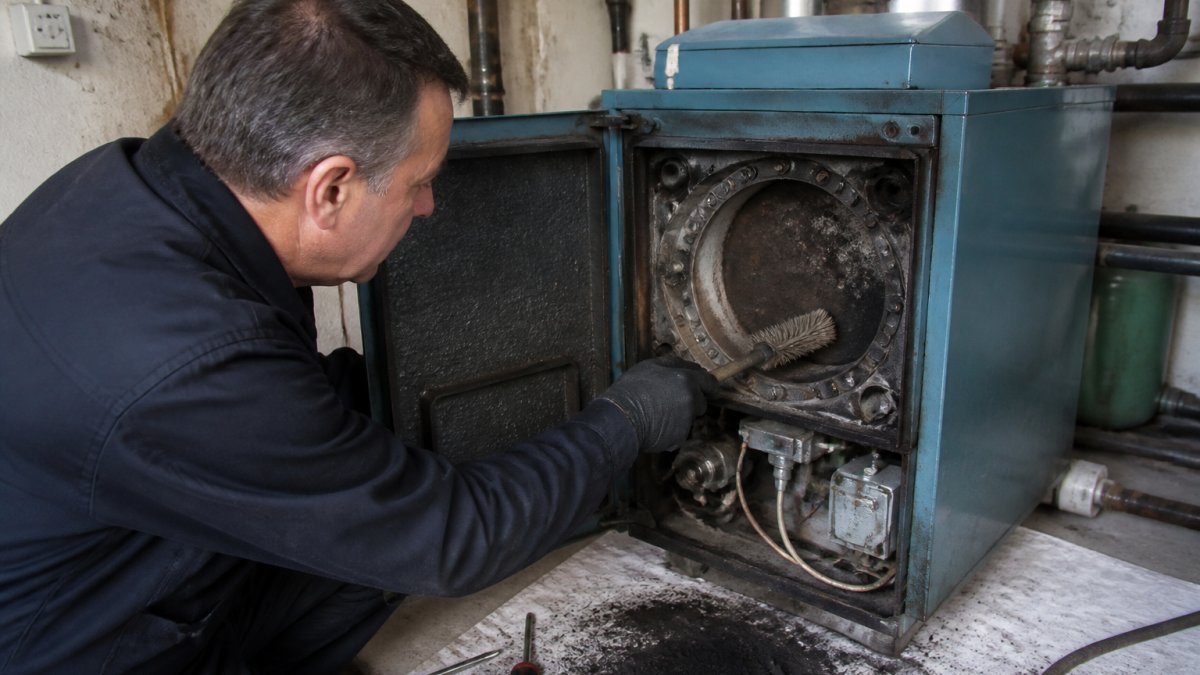
Table of Contents
- Why Boiler Maintenance After Years Matters
- Assess Your Boiler's Age and Type Before Starting
- What You Can Safely Inspect Yourself: A Boiler Maintenance Checklist
- What You Should Never Adjust or Inspect Yourself
- Recommended Boiler Service Frequency and First Professional Inspection
- Warning Signs That Require Urgent Professional Attention
- Boiler Repair or Replacement: Making the Right Decision
- Getting Started: Your Next Steps
- Frequently Asked Questions
Last Updated: October 12, 2026
Why Boiler Maintenance After Years Matters
Your boiler may have gone years without professional service, perhaps you inherited it with the house, or simply never scheduled an appointment. Either way, your reliability and safety are at risk.
Boiler maintenance after years of neglect isn't optional, it's essential. An unserviced boiler accumulates hidden sediment, corrosion, and carbon buildup until it fails mid-January at 2 AM, when you're paying emergency rates.
The good news: it's rarely too late. Even a boiler untouched for a decade can often return to safe, efficient operation, with a clear plan.
At Whole Home Comfort Systems, we help homeowners in older homes face this exact situation daily. This guide covers what you can safely check yourself, what requires a professional, and how to choose between repair and replacement.
Assess Your Boiler's Age and Type Before Starting
Before touching anything, know what you're working with. A gas boiler behaves nothing like an oil or steam system, and age and fuel type determine which maintenance matters most.
Determining boiler age and fuel type
Find your boiler's nameplate, usually on the front or side. Look for the manufacturer, model number, and installation date. If it's illegible, check inspection records or ask long-time neighbors.
Identify your fuel type by looking at:
- Gas boilers: Have a gas line running to the unit and a burner assembly inside
- Oil boilers: Have an oil tank (often in the basement or outside) and an oil nozzle inside the burner
- Steam boilers: Produce steam that rises through pipes to radiators; hot-water boilers use circulating water instead
Write down the age, fuel type, and model number. You'll need this information when you call a technician.
Understanding your boiler's expected lifespan
Most boilers last 15 to 25 years with regular maintenance; some reach 30. An oil boiler serviced annually may work fine at 20 years, while an unserviced gas boiler at 18 is on borrowed time.
Past 20 years, replacement is likely in your future, but an inspection reveals how much life remains. Neglect compresses lifespan: a 15-year-old boiler with no maintenance history is riskier than a 20-year-old serviced annually.
What You Can Safely Inspect Yourself: A Boiler Maintenance Checklist
You don't need a license to look. You do need to know the difference between "checking" and "adjusting." Checking is safe. Adjusting is not.
Visual checks you can perform
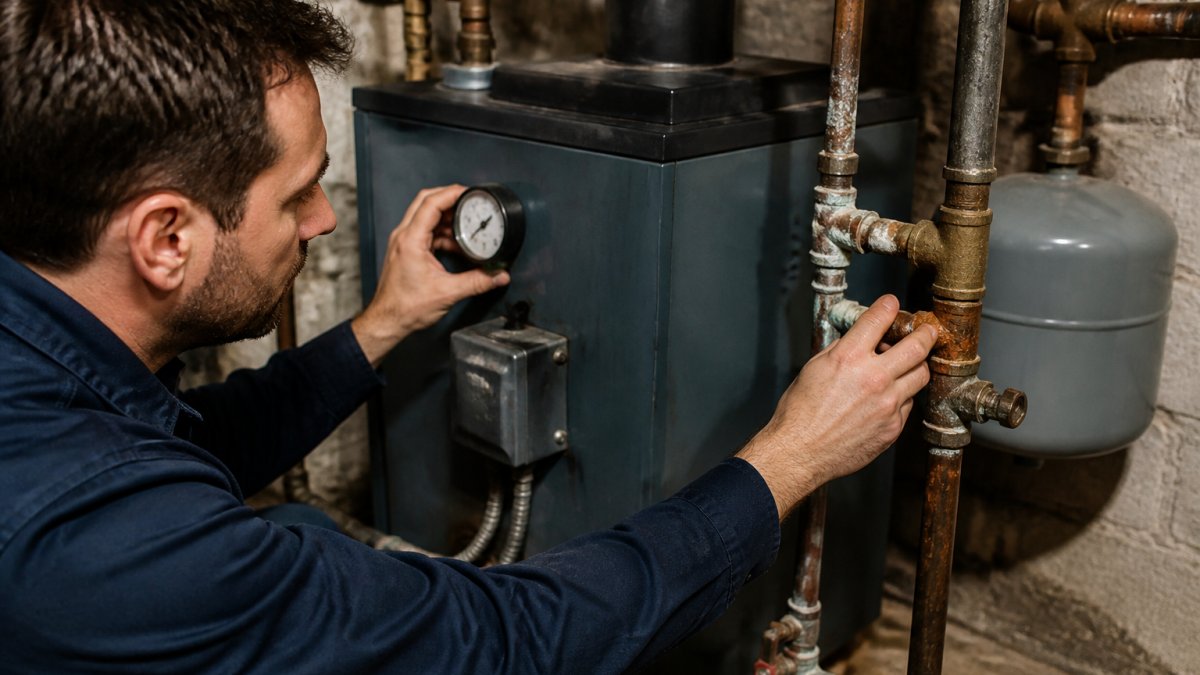
Start with your eyes. Safety and efficiency problems often announce themselves visually.
Look for leaks. Water stains, puddles, or damp spots around the boiler base signal a problem. Check pipe connections at the boiler and radiators.
Inspect visible pipes. Trace pipes leaving the boiler for dents, loose straps, or unusually hot sections. Loose pipes rattle, lose heat, and create safety hazards.
Look at the burner area. If you can safely see inside the burner chamber, check for excessive soot or debris.
Check the vent and flue. Follow the exhaust pipe out of your home; it should be clear of debris, bird nests, or blockages.
Pressure and water level basics
Your boiler's pressure gauge looks like a clock face. Normal pressure for a hot-water boiler is usually 12 to 15 PSI when cold, check your nameplate or manual for the exact range. Too low means poor heating; too high means the relief valve releases water.
To check pressure: Green zone means you're fine. Red zone or broken means call a technician, never adjust pressure yourself.
To check water level: Some boilers have a sight glass that should read half full. If it's low, the boiler needs water, a professional's job, since the system should hold water without constant refilling.
Looking for obvious leaks and corrosion
Leaks are the most common problem in older systems, and corrosion weakens metal over time. Walk around your boiler and check:
- All pipe connections and joints
- The bottom of the boiler where sediment settles
- Where pipes enter floors or walls
- The expansion tank (a separate metal tank connected to the boiler)
Small drips that reappear after wiping are leaks. Mark them and get a professional assessment, some are minor and monitorable, others need urgent repair.
What You Should Never Adjust or Inspect Yourself
This is the critical boundary. Know what's off-limits.
Never touch the pressure relief valve. It protects against over-pressurization; adjusting it incorrectly creates a safety hazard.
Never drain the boiler without professional guidance. Draining requires proper procedure to avoid air locks and damage.
Never open sealed components. If a part is bolted shut, it stays shut. You don't have the tools or knowledge to reassemble it correctly.
Never work on electrical connections. Boilers have electrical controls and safety switches; electricity and water don't mix. Leave it to a professional.
Never adjust water feed systems or float valves. These control water entering the boiler; incorrect adjustment causes flooding or low-water conditions, both dangerous.
The rule is simple: if you're not 100% certain it's safe, don't do it.
Recommended Boiler Service Frequency and First Professional Inspection
You've assessed your boiler. You've done the visual checks. Now it's time to call a professional for boiler maintenance after years of neglect.
What happens during a professional first service after years of neglect
The first service after years without maintenance is thorough. A technician will spend 1 to 3 hours depending on what they find.
Inspection: The technician examines the heat exchanger, burner, combustion chamber, and all visible components for cracks, corrosion, and damage.
Cleaning: Sediment, soot, and debris accumulate over years. The technician flushes the system, cleans the fire side (where combustion happens), and removes buildup, restoring efficiency.
Testing: Pressure, water quality, burner combustion, and safety controls are all checked. Gas boilers are tested for carbon monoxide leaks.
Adjustments: The technician makes any minor adjustments that improve performance, unlike the adjustments you must avoid, they have the training and tools.
Documentation: A good technician provides a written report listing what was found, done, and still needs attention.
Annual maintenance going forward
After that first service, your boiler needs annual service, ideally in the fall before heating season. If you heat with oil, annual service is non-negotiable, oil burners require yearly maintenance to function safely.
Annual boiler maintenance includes:
- Inspection of all components
- Cleaning of the burner and heat exchanger
- Testing of pressure, combustion, and safety controls
- Flushing of sediment buildup
- Adjustment of burner settings if needed
This routine keeps your boiler safe, efficient, and reliable, catching small problems before they become big ones.
Warning Signs That Require Urgent Professional Attention
Some boiler problems can't wait. If you notice any of these, call a technician today.
No heat or weak heat: The burner isn't firing, the pump isn't circulating water, or the heat exchanger is blocked.
Unusual noises: Banging, clanging, or kettling means something is wrong.
Visible water pooling or dripping: A slow drip might wait a day or two.
Smell of gas or oil: If you smell fuel, shut off the boiler and call immediately. Do not use the system.
Pilot light won't stay lit (gas boilers): An occasional outage is normal.
Water is discolored or rusty: Rusty water indicates internal corrosion, affecting water quality and heating efficiency.
Don't guess with these problems, call a professional. Whole Home Comfort Systems offers 24/7 emergency service.
Boiler Repair or Replacement: Making the Right Decision
Your boiler is old, you've had it inspected, and the technician found problems. Now comes the hard question: fix it or replace it? The decision depends on age, repair cost, and remaining life.
When repair makes sense
The boiler is under 15 years old. Newer boilers are usually worth repairing. Parts are available, and the system has years left.
The repair cost is low. If the repair is under 30% of replacement cost, repair makes sense, a $300 repair on a $2,000 replacement is worth doing.
The problem is isolated. A single failed component (valve, pump, control) is repairable if the rest of the system is sound.
You plan to stay in the home. If you're moving in a year or two, repair buys time, you won't recoup replacement costs before you leave.
The boiler has a service history. A regularly serviced boiler likely has life left; a neglected one is riskier.
When replacement is the smarter investment
The boiler is over 20 years old. These boilers are near end of life, even if the current repair works, the next problem is likely soon.
The repair cost is high. If the repair approaches 50% or more of replacement cost, replacement makes financial sense. You get a warranty and modern efficiency.
The boiler has no service history. An old, neglected boiler is a gamble. Replacement removes the uncertainty.
Your energy bills are high. Modern boilers are 15% to 25% more efficient than old ones. Over 15 years, that efficiency pays for the replacement.
You're planning to stay long-term. If you'll be in the home 10+ more years, a new boiler pays for itself through efficiency and reliability.
Getting Started: Your Next Steps
You've read this guide. You know what you can check and what requires a professional. You understand the risks and the options.
Here's what to do next:
1. Find your boiler's age and type. Locate the nameplate. Write down the year, fuel type, and model.
2. Do a visual inspection. Walk through the checklist above for leaks, corrosion, and obvious problems. Photograph anything concerning.
3. Call a technician. Don't wait, boiler maintenance after years of neglect should happen before winter.
**4.
5. Schedule annual service. After the first service, commit to yearly maintenance, the cheapest insurance against a winter heating failure.
Whole Home Comfort Systems can help with all of this.
Don't let boiler maintenance after years of neglect become a crisis.
Boiler maintenance after years of neglect seems daunting, but it's manageable with the right approach.
Frequently Asked Questions
What should I do if my boiler hasn't been serviced in years?
Stop using it if you notice any warning signs like strange noises, leaks, or no heat. Schedule a professional inspection immediately. A qualified technician will assess the heating system safely, check the pressure relief valve, inspect the heat exchanger and burner, and determine if repairs or replacement is needed. Don't attempt adjustments yourself, boilers have pressurized components and combustion systems that require professional expertise.
How often should a residential boiler be serviced?
Annual service is the industry standard for both oil and gas boilers. Schedule maintenance before the heating season begins. A professional will clean components, remove soot and debris, check system pressure, inspect vents and the chimney, test the burner, and verify the pressure relief valve works properly. This boiler service frequency helps catch problems early and keeps your heating system running efficiently throughout the winter.
How long does a boiler normally last?
Most boilers have a boiler lifespan of 15 to 25 years, depending on fuel type (gas or oil), maintenance history, and water quality. Cast-iron boilers often last longer than steel models. If your boiler is approaching 20 years and has gone years without maintenance, a professional inspection is urgent. Even if it still heats, years of neglect may mean internal corrosion or sediment buildup that affects efficiency and safety.
Can regular maintenance extend a boiler's lifespan?
Yes. Annual boiler maintenance removes soot, prevents corrosion, checks water quality, and catches wear early. Regular inspections of pipes, radiators, valves, and connections prevent leaks and system failures. A well-maintained boiler can reach or exceed its expected lifespan, while neglected boilers often fail prematurely. Starting maintenance now, even after years of neglect, will help preserve your heating system and avoid costly emergency repairs.
Need HVAC service in Mansfield, MA?