
Boiler Service Near Me: Costs, Checklist & Timing
Table of Contents
- How to Get Boiler Service Near Me: Start With the Right Steps
- What a Boiler Inspection Checklist Covers
- How Often to Service a Boiler
- Boiler Service Duration: How Long a Visit Takes
- Boiler Service Cost: What Drives the Price
- How to Choose a Boiler Service Provider Near You
- Repair or Replace? Making the Call
- Frequently Asked Questions
Last Updated: October 18, 2026
How to Get Boiler Service Near Me: Start With the Right Steps
When your heat cuts out in January, searching for boiler service near me usually happens at the worst possible moment. At Whole Home Comfort Systems, we have handled oil and gas heating calls across Mansfield and the South Shore for more than 20 years, and the pattern is always the same: panic first, planning second. Boiler service is the scheduled inspection, cleaning, and adjustment of a residential boiler so it runs safely and efficiently. Below, we walk through the safe checks to try before you call, what a technician actually does, how long a visit takes, and what drives the price.
Here is the part most guides get wrong: they jump straight to "call a pro" without telling you which symptoms are safe to poke at and which ones mean stop everything.
Before You Call: A Safe Troubleshooting Check
Start with the thermostat, not the boiler. A dead thermostat, tripped breaker, or closed fuel valve explains a surprising share of "no heat" calls, and those are checks any homeowner can make safely.
Work through this list before you dial:
- Confirm the thermostat is set to heat and above room temperature
- Replace thermostat batteries if the display is blank or flickering
- Check the breaker panel for a tripped switch
- Verify the fuel valve on an oil line is open, or that the gas supply is on
- Look at the boiler's pressure gauge and confirm the pilot or ignition is lit
- Replace a clogged air filter if the system has one
If the boiler fires and shuts off repeatedly, or you hear banging, kettling, or rumbling, note when it happens. That detail saves the technician diagnostic time, and you pay for less of it.
When to Stop Troubleshooting and Call for Service
Stop immediately if you smell gas, see soot or scorch marks, notice water pooling around the unit, or the boiler keeps tripping the breaker. These point to combustion, electrical, or pressure problems that are not homeowner territory.
Carbon monoxide is odorless, so install a working CO alarm near sleeping areas if you do not have one. The U.S. Consumer Product Safety Commission guidance on CO alarms explains placement and why alarms belong on every level of the home.
What a Boiler Inspection Checklist Covers
A boiler inspection checklist is the technician's documented review of combustion, water, electrical, and venting components. A standard visit covers roughly a dozen checkpoints, and you should receive a written report of what passed and what needs attention. Most competitors stop at the list. The useful part is knowing what each check is actually looking for, so you can read the report and ask informed questions.
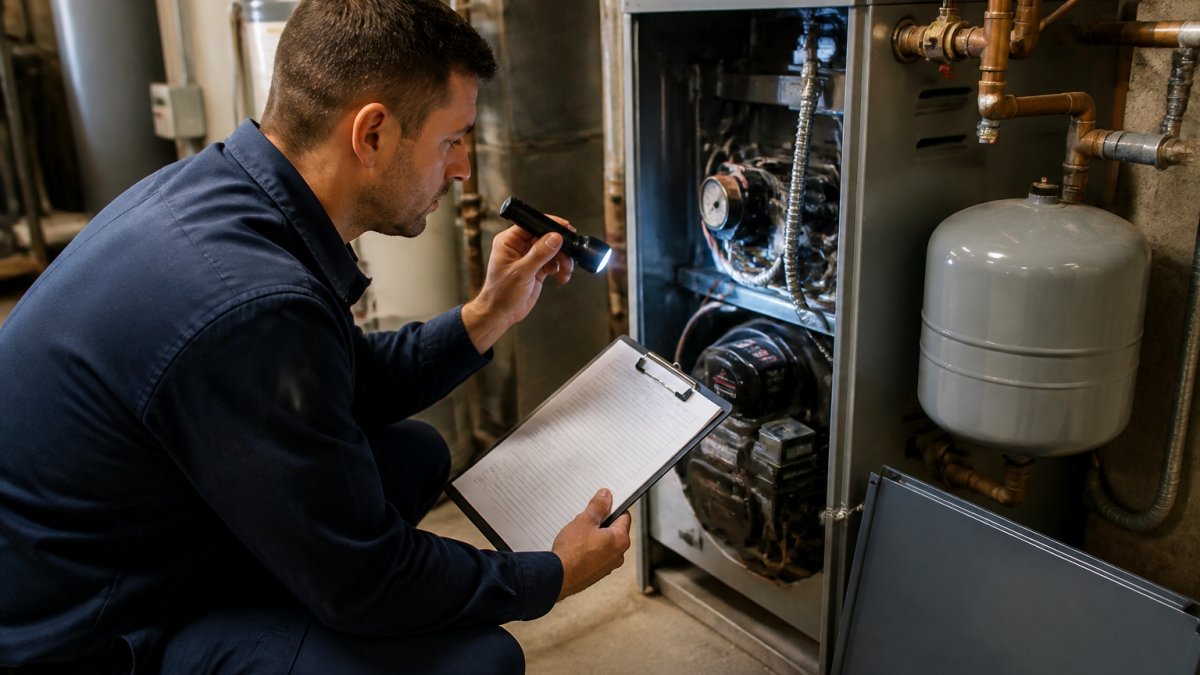
Here is what a thorough appointment walks through, in roughly the order a technician works:
- Service history and complaint review. The technician asks what changed, when, and under what conditions. This is the cheapest diagnostic tool available and it shapes everything that follows.
- Flue and venting. Looking for blockages, corrosion, sagging, or improper slope. A vent that slopes the wrong way can trap combustion gases instead of carrying them out.
- Heat exchanger. Inspected for cracks, soot, or scale. A cracked heat exchanger is a safety failure, not a performance issue, and it changes the conversation from repair to replacement.
- Burner and flame. Flame color and stability are checked. A steady blue flame is the goal; a lazy yellow flame or a floating flame points to an air or fuel problem.
- Combustion analysis. Where the equipment allows, readings are taken with an analyzer. Ask for the numbers, not just a pass/fail. Those readings tell you whether the boiler is burning cleanly or quietly wasting fuel.
- Water pressure and expansion tank. The gauge is read and the expansion tank charge is verified. Wrong pressure shortens component life and can trip safety controls.
- Circulator pump and zone valves. Each zone is exercised to confirm it actually heats when called. A zone that runs but never gets warm is a common hidden fault.
- Safety controls. The high-limit switch and low-water cutoff are tested. These are the devices that shut the boiler down before something worse happens, so a technician who skips them is skipping the point.
- Fuel lines and connections. Checked for leaks and proper support.
- Filters, nozzles, and strainers. Oil systems get a nozzle and filter change; gas systems get their filters and orifices checked.
- Electrical connections and grounding. Loose connections and corrosion are common causes of intermittent faults.
- Final report and recommendations. You should leave with a written record of what was checked, what passed, what needs attention now, and what can wait.
Photograph the inspection report and tape the date to the boiler itself. When you sell the house or file an insurance claim, a dated service record is worth more than a verbal "it was serviced."
A good report separates "must fix now" from "watch this." If everything on the list is urgent, ask why. If nothing is written down, ask for it in writing before the technician leaves.
How Often to Service a Boiler
Most manufacturers and heating contractors recommend an annual boiler tune-up, ideally in early fall before the heating season starts. Oil-fired boilers benefit most from yearly attention because burner nozzles and filters clog, while gas boilers still need annual checks for combustion safety and venting.
How often to service a boiler can stretch to every other year for a newer, clean-burning gas unit in light use, but annual is the safer default. Skipping service does not usually cause a dramatic failure. It causes a slow decline: rising fuel bills, longer run times, and a system that quits on the coldest night of the year.
If your boiler has gone a decade without attention, it is not too late to start. A first visit may turn up deferred items, but a technician can tell you honestly whether the unit is serviceable or on borrowed time.
Boiler Service Duration: How Long a Visit Takes
A routine boiler service duration runs about 60 to 90 minutes for a single-zone residential unit. Add time for multiple zones, an oil-fired system needing a nozzle and filter change, or a first-time visit where the technician has no service history to work from.
An emergency repair call is different. Diagnosis might take 30 minutes, but if a part has to be sourced, the job can stretch to a few hours or a return visit. That is why we quote the repair before starting work, so you know what you are approving.
Boiler Service Cost: What Drives the Price
Boiler service cost depends on the fuel type, the number of zones, the condition of the unit, and whether the visit is routine or emergency. Routine maintenance is the least expensive visit you will ever pay for.
Most homeowners want a number before they book, so here is the honest way to think about it. Exact figures vary by market and by shop, which is why a written estimate matters more than any national average you find online.
The biggest cost driver is what the technician finds. A clean tune-up stays close to the base service price.
When you read an estimate, separate the line items into three buckets:
- Diagnostic or trip fee, what you pay just to have the problem identified
- Labor, usually quoted by the hour or as a flat rate for a defined job
- Parts, ask whether the price is list, marked up, and whether the part carries its own warranty
Ask for a written quote before any repair begins, and ask whether the diagnostic fee is credited toward the repair. That single question separates transparent shops from ones that surprise you at checkout.
We provide straightforward pricing with clear quotes before work begins, so you know the cost before approving anything. No mystery, no "we'll see when we get there."
How to Choose a Boiler Service Provider Near You
Choosing a boiler service provider comes down to licensing, insurance, response time, and whether the quote is in writing. In Massachusetts, heating work requires proper licensing, so ask for it. A company that hesitates on that question is telling you something.
Use this checklist when comparing providers:
- Confirm the license and insurance, and ask for proof
- Ask whether emergency service is genuinely staffed overnight and on weekends
- Request a written estimate before work starts
- Read recent customer reviews for punctuality and follow-through
- Ask what the service appointment includes and whether you get a report
- Confirm the service area covers your address without a travel surcharge
What most reviews miss is the follow-up question: does the company stand behind its work when something fails a week later? Ask directly. The Massachusetts Board of State Examiners of Plumbers and Gas Fitters maintains licensing information you can verify independently.
Whole Home Comfort Systems is locally owned and operated, licensed and fully insured, with same-day service and 24/7 emergency availability. When a customer called on a Friday night with a dead furnace, our technician was at the house within two hours and had heat restored before midnight.
Repair or Replace? Making the Call
Repair usually wins when the boiler is under 15 years old, the fix is a single component, and the unit has a service history. Replacement makes more sense when repairs pile up, efficiency has dropped, or the heat exchanger is compromised.
A simple rule: if a repair costs a large share of a new installation and the boiler is past its expected lifespan, put the money toward replacement. A cracked heat exchanger is not negotiable, since it is a safety issue, not a performance one.
Ask the technician for both numbers, repair and replace, in writing. A straight answer there tells you more about the company than any advertisement.
Frequently Asked Questions
How much should boiler service cost?
Boiler service cost depends on the boiler type (oil or gas), the scope of the visit, parts needed, and whether it is a routine tune-up or an emergency repair. A standard annual service typically costs less than a repair involving failed components. Whole Home Comfort Systems provides straightforward pricing with clear quotes before work begins, so you know the cost before approving anything. Request a quote on the website for current pricing.
How often should a boiler be serviced?
Most manufacturers and heating technicians recommend servicing a boiler once a year, ideally before the heating season starts. Annual service keeps the system running efficiently, catches small issues before they become emergency repairs, and supports safety checks on combustion and venting. If your boiler has been skipped for several years, book a service now rather than waiting; a technician can assess its condition and tell you what needs attention.
Can I service my boiler myself?
You can handle simple tasks like checking the pressure gauge, bleeding radiators, and keeping the area around the boiler clear. Combustion testing, cleaning burner components, and inspecting venting or gas connections require a licensed technician. Gas and oil boiler work involves safety risks, and DIY adjustments can void warranties or create carbon monoxide hazards. Leave the technical service to a licensed professional and stick to basic upkeep yourself.
What does a professional boiler service include?
A professional boiler service typically includes a visual inspection of the unit and venting, a check of the pressure and temperature readings, cleaning of key components, a combustion or efficiency check where applicable, and a review of safety controls. The technician should also test for leaks and note any parts showing wear. Ask for a boiler inspection checklist upfront so you know exactly what the visit covers before it starts.
If your boiler is acting up or overdue for its annual tune-up, do not wait for the first cold snap to find out. Whole Home Comfort Systems offers same-day service, 24/7 emergency response, and straightforward pricing with a clear quote before any work begins. Our licensed, insured technicians handle oil and gas boilers, furnaces, and full heating systems across the South Shore. Request service with Whole Home Comfort Systems and get your heat back to reliable before winter decides for you.
Need HVAC service in Mansfield, MA?