
Gas Furnace Installation Cost With Labor: 2026 Price Guide
Table of Contents
- What Gas Furnace Installation Cost With Labor Actually Includes
- Furnace Installation Labor Cost: A Line-by-Line Breakdown
- 80% vs. 95% AFUE Furnace Cost: What the Efficiency Jump Really Adds
- What a Gas Furnace Installation Quote Should Spell Out
- Furnace Replacement Labor Time: How Long the Job Takes
- Regional Labor Rates and Why Two Quotes for the Same Furnace Differ
- Evaluating a Furnace Installation Estimate: Red Flags and Fair Questions
- Frequently Asked Questions
Last Updated: October 19, 2026
What Gas Furnace Installation Cost With Labor Actually Includes
A furnace installation cost is never one number.
At Whole Home Comfort Systems, we have over 20 years of local experience installing oil and gas furnaces across Mansfield and the South Shore. The pattern is consistent.
Below, we break down how furnace installation cost with labor splits between equipment and workmanship, what each labor line item covers, and how to read a quote before you sign it.
Equipment Cost vs. Labor Cost: Where the Money Goes
Equipment cost is the price of the furnace unit itself, sized to your home's heating capacity.
A common approach is to budget roughly half the total project cost for equipment and half for labor and materials, though the split shifts with efficiency level and installation complexity.
The mistake we see most often: homeowners compare two quotes on the equipment line alone, then pick the cheaper unit. The labor line is where the real difference sits.
Furnace Installation Labor Cost: A Line-by-Line Breakdown
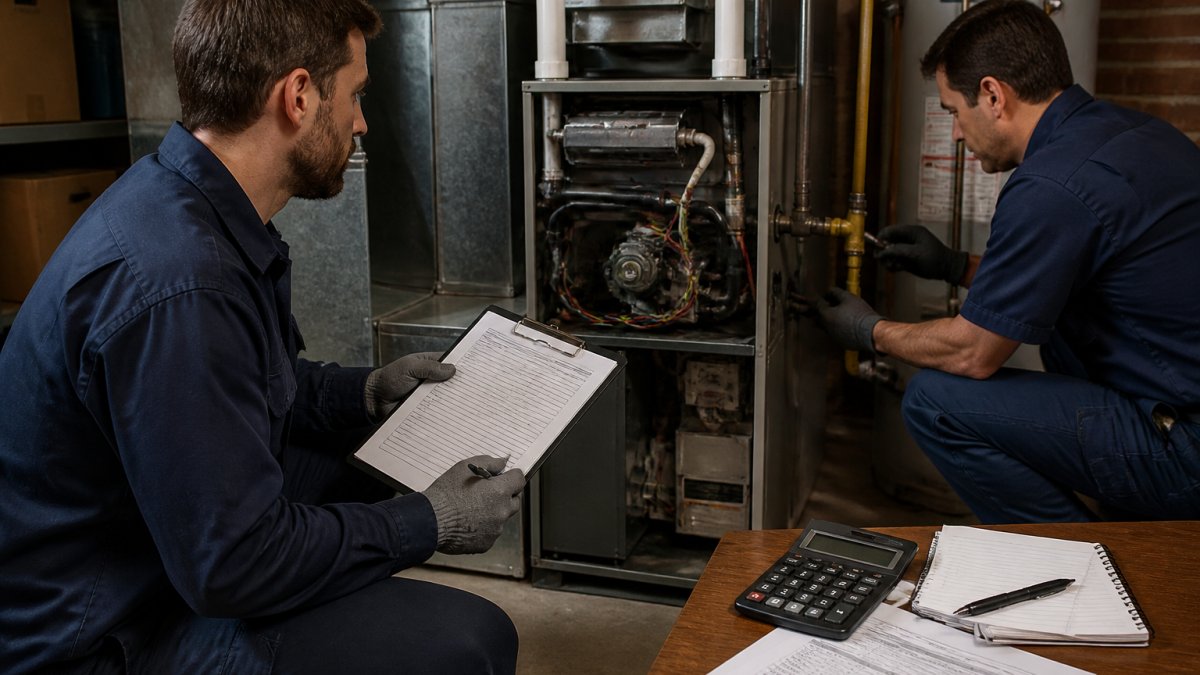
Think of furnace installation labor cost as a set of discrete jobs, not one flat fee.
| Labor Task | Typical Labor Time | What Drives the Cost |
|---|---|---|
| Old furnace removal and disposal | 1-2 hours | Weight, location (basement vs. attic vs. closet), haul-away and refrigerant-free disposal rules |
| Gas line connection and pressure test | 1-3 hours | Distance to the meter, whether the existing shutoff and sediment trap meet code, pipe sizing |
| Venting (flue and exhaust) | 2-6 hours | Whether existing flue can be reused; high-efficiency units need PVC venting and condensate drain |
| Electrical connections and controls | 1-2 hours | Existing circuit capacity, thermostat wiring, whether a new disconnect is required |
| Ductwork modifications | 0-8+ hours | Transition fit, sealing, resizing, or new runs; the single biggest labor variable |
| Permit pull and inspection scheduling | 1-2 hours of admin time | Local permit office requirements and inspection backlog |
| Startup, commissioning, and safety testing | 1-2 hours | Combustion analysis, gas pressure verification, temperature rise check, airflow setting |
Add those hours up and a straightforward like-for-like swap lands in the range most contractors quote as a single labor line.
A few mechanics worth knowing before you read a quote:
- Labor is billed by the hour or by the job, not by the task. Most residential contractors quote a flat labor price per installation rather than an hourly rate, but the flat price is built from an internal hour estimate like the one above. Ask for the hour estimate behind the flat price.
- The gas line is where hidden labor lives. If the existing line is undersized for the new furnace's BTU input, the contractor has to run a larger line, sometimes from the meter. That is a multi-hour job that a vague quote will not show.
- Venting changes with efficiency tier. An 80% AFUE furnace can often reuse a metal flue; a 90%+ AFUE furnace needs PVC venting and a condensate drain, which adds both material and labor. This is why the same house can get two very different labor quotes for two different furnaces.
Each of these has its own labor rate and time estimate. A quote that lists them separately is a quote you can trust.
80% vs. 95% AFUE Furnace Cost: What the Efficiency Jump Really Adds
The AFUE rating tells you how much of the fuel a furnace converts to heat. An 80% AFUE unit sends roughly 20% of its fuel up the flue.
The 80% vs. 95% AFUE furnace cost gap shows up in two places. First, the equipment itself costs more at the higher efficiency tier.
Whether the jump pays off depends on your climate, your fuel costs, and how long you plan to stay in the home.
Ask your contractor to show both options side by side, with the labor difference included.
What a Gas Furnace Installation Quote Should Spell Out
A gas furnace installation quote should state the equipment model and efficiency rating, an itemized labor breakdown, permit responsibility, warranty terms, and what happens if ductwork or venting needs unforeseen work.
If any of those are missing, ask before signing. A fair quote answers them in writing.
Scope-of-Work Comparison: Like-for-Like Replacement vs. New Installation
The scope of work is where two quotes for the "same" furnace can differ by thousands. Use this comparison to read your own estimates.
| Scope Item | Like-for-Like Replacement | New Installation or System Change |
|---|---|---|
| Old unit removal | Standard, included | Standard, included |
| Gas line | Reconnect to existing | May require new run or resizing |
| Venting | Match existing flue | Often new venting required |
| Ductwork | Reuse existing ducts | May need resizing or new runs |
| Electrical | Reconnect existing circuit | May require new circuit |
| Permits | Usually one trade permit | Often multiple permits |
| Labor time | Shorter | Longer, more variables |
A like-for-like replacement swaps one furnace for a similar unit on existing connections. A new installation, or a switch in furnace type or efficiency tier, touches more of the system. The labor reflects that.
Furnace Replacement Labor Time: How Long the Job Takes
Furnace replacement labor time typically runs one full day for a straightforward like-for-like swap. New installations, venting changes, or ductwork modifications can stretch to two or more days.
Ask your contractor for a time estimate in the quote. It tells you two things: whether the labor charge matches the hours, and whether the crew is planning to rush the job.
Regional Labor Rates and Why Two Quotes for the Same Furnace Differ
Labor rates vary by region, and that is normal. What matters is comparing quotes using the same method, because most homeowners compare the wrong number.
Here is a repeatable method for normalizing quotes across locations and bidders:
- Fix the equipment first. Write down the exact model number and AFUE rating from each quote. If the models differ, you are not comparing labor, you are comparing furnaces. Ask every bidder to price the same model.
- Strip out equipment and materials. Subtract the equipment line and any itemized materials (vent pipe, gas line, duct fittings, thermostat). What remains is labor plus permit plus disposal.
- Normalize the scope. Use the scope-of-work table in the next section to check that each bid includes removal, gas line, venting, electrical, ductwork, permit, and commissioning. A bid that omits venting is not cheaper, it is incomplete.
- Compare labor hours, not just labor dollars. Ask each bidder for the estimated labor hours behind their flat labor price. Two bids with the same dollar labor line but different hour estimates tell you one crew is planning to move faster, which is a quality question, not a price question.
- Adjust for local overhead last. Only after steps 1-4 should you account for regional differences in labor rates.
What actually drives regional labor rate differences:
- Cost of living and prevailing wages. Labor rates track local wages, and wages track local cost of living. A dense metro with a tight labor market will carry higher hourly rates than a rural area with more available technicians.
- Licensing and permit regime. Some jurisdictions require a licensed contractor to pull the permit and inspect the work; others allow homeowner permits with different inspection requirements. Stricter regimes add administrative labor and inspection time to every job.
- Climate and housing stock. Colder regions with long heating seasons tend to have more furnace work, which can mean more competition and more standardized pricing, but also more demand in peak season. Older housing stock with legacy venting and ductwork adds labor regardless of region.
- Seasonality. Labor rates and availability swing with the heating season. A quote in October and a quote in March for the same job can differ because of crew availability, not because the work changed.
A local contractor carries local overhead: licensing, insurance, and code knowledge specific to your area. That overhead is part of the labor rate, and it is what keeps the install legal and safe.
The U.S. Department of Energy guidance on furnaces is a useful reference for understanding efficiency ratings and how they affect operating cost over time, which matters when you are deciding whether the higher-efficiency unit justifies its added labor.
Evaluating a Furnace Installation Estimate: Red Flags and Fair Questions
An installation estimate is only as good as the questions you ask about it. Bring these to every bidder:
- Is the equipment model and AFUE rating stated in writing?
- Is labor itemized by task, or a single lump sum?
- Who pulls the permit, and is it included in the price?
- Is old furnace removal and disposal included?
Red flags: no written scope, "extras billed as needed," no permit mentioned, and a price that is far below every other bid.
At Whole Home Comfort Systems, our approach is straightforward pricing with a clear quote before work begins. No surprise costs, no vague line items.
For homeowners weighing a replacement, the ENERGY STAR furnace buying guide explains how efficiency ratings translate into real operating savings.
Frequently Asked Questions
How much of a furnace installation quote is labor?
Labor usually makes up a meaningful share of the total, though the split depends on the job. A like-for-like swap in an accessible basement takes fewer hours than a first-time install that needs new venting, a gas line run, or ductwork changes. Ask the contractor to itemize equipment, labor, permits, and any duct or venting work separately. When those lines are visible, you can compare quotes on the same basis instead of guessing why one bid is thousands higher than another.
Does replacing a gas furnace cost less than installing one for the first time?
Usually yes. A replacement reuses the existing venting, gas line, electrical connection, and ductwork, so the scope is mostly disconnect, remove, set the new unit, and commission it. A first-time installation adds design work, new venting, possibly a gas line extension, duct modifications, and a fresh permit inspection. Those extras drive both material and furnace installation labor cost up. Ask each contractor which category your job falls into before comparing numbers.
How do 80% and 95% AFUE gas furnaces compare in installed cost?
The 95% AFUE units cost more upfront, and the gap is wider than the equipment sticker alone. High-efficiency furnaces often need different venting, such as PVC pipe routed through a sidewall instead of a metal flue, and some need condensate drainage. That extra labor and material is part of the 80% vs. 95% AFUE furnace cost difference. In colder climates the fuel savings can offset the premium over time, so run the numbers for your home rather than assuming the cheaper unit wins.
What should I check in a gas furnace installation quote before signing?
Look for four things: a model number for the equipment, a labor line that states hours or a flat rate, permit and inspection fees listed separately, and whether old furnace removal and disposal are included. Ask who handles the post-installation test, including combustion analysis and temperature rise checks. A quote that lists one lump sum with no breakdown makes it hard to tell whether you are paying for ductwork, venting, or just the box. Get the scope in writing before work starts.
A furnace that fails in January does not wait for a convenient budget. When you need a straight answer on gas furnace installation cost with labor, and a quote you can actually read, Whole Home Comfort Systems is here. We bring over 20 years of local experience, 24/7 emergency service, and clear quotes before any work begins. Request service today and get a written estimate with no surprise costs.
Need HVAC service in Mansfield, MA?