
Need Heating Service or AC Repair? How to Decide
Last Updated: November 7, 2026
Quick Summary
If the heat is running but the house stays cold, you need a heating service; if the AC is running but the air is warm, you need AC repair. When both systems misbehave at once, the cause is usually shared: the thermostat, ductwork, or electrical panel.
- A clogged air filter is the single most common cause of weak airflow.
- Shut the system off and call for emergency service if you smell gas or see a yellow flame.
- Keep leaves, snow, and debris at least two feet away from the AC condenser.
- EPA 608 certification is legally required to handle refrigerants.
- Ask for the repair and replacement estimates in writing on the same visit.
Table of Contents
- Heating Service or AC Repair: How to Tell Which You Need
- Heating Repair in Mansfield, MA: Signs Your Furnace or Boiler Needs Help
- AC Repair in Mansfield, MA: When Your Cooling System Is Failing
- Safe Troubleshooting to Try Before You Call
- Emergency HVAC Repair in Mansfield, MA: When to Call Right Now
- HVAC Maintenance in Mansfield, MA: The Cheapest Repair Is the One You Avoid
- Repair, Replace, or Upgrade: Making the Call on Older Equipment
- What Transparent Pricing and a Real Service Visit Look Like
- Frequently Asked Questions
Heating Service or AC Repair: How to Tell Which You Need
When your home stops feeling comfortable, the first question is simple: is this a heating service problem or an AC repair problem? The answer comes down to which system is running, what symptom you're seeing, and whether the issue is airflow, temperature, or noise. At Oil gas heating ac cooling service and installation, we help homeowners sort that out.
Here's the short version. If the heat is running but the house stays cold, you have a heating problem. If the AC is running but the air is warm, you have a cooling problem. If both systems misbehave at once, the culprit is usually something they share: the thermostat, the ductwork, or the electrical panel.
Heating Repair in Mansfield, MA: Signs Your Furnace or Boiler Needs Help
A heating system rarely fails without warning. Furnaces and boilers often give warning signs before they quit, and catching them early can prevent a cold night. A heating service call is warranted when your system shows any of the following:
- The burner ignites but the blower never starts, or the blower runs constantly
- You hear banging, rumbling, or whistling from the furnace or boiler
- Rooms heat unevenly, with some staying cold no matter the thermostat setting
- The pilot light or electronic ignition keeps shutting off
- You smell oil, gas, or exhaust fumes near the unit
- Your energy bills climb while usage stays the same
Warning Signs You Should Never Ignore
Some symptoms are annoyances. Others are safety issues, and those need a technician today, not next week.
Watch out: A yellow or flickering gas flame, soot around the burner, or a smell of rotten eggs means combustion is not completing properly. Shut the system off at the thermostat, leave the house if the smell is strong, and call for emergency service. Carbon monoxide is odorless, so install a CO alarm on every level of your home and test it monthly. The U.S. Consumer Product Safety Commission guidance on carbon monoxide safety explains why this matters more than most homeowners realize.
Oil furnaces have their own tells: rumbling, increased chimney smoke, or a burner that needs resetting repeatedly usually points to a clogged nozzle or dirty filter. A licensed oil burner technician should handle those, since the fuel system is not a DIY project.
AC Repair in Mansfield, MA: When Your Cooling System Is Failing
Central air and mini-splits fail in a narrower set of ways, which makes diagnosis a bit easier. An AC repair visit is likely when you notice warm air from the vents, weak airflow, water pooling near the indoor unit, or a system that short-cycles on and off every few minutes.
The most common complaint we hear is warm air. If your vents are blowing warm, the cause is usually a dirty filter choking airflow, a refrigerant leak, a failing compressor, or a thermostat set to the wrong mode. Our guide to the 5 causes of central AC blowing warm air breaks down each one.
Mini-split systems add a few quirks. If the indoor head runs but the outdoor unit is silent, check the breaker first. If the unit ices over, shut it off and let it thaw before calling; running a frozen coil can damage the compressor.
Safe Troubleshooting to Try Before You Call
- Check the thermostat. Confirm it's set to the right mode (heat vs. cool) and the temperature is actually calling for action. Replace the batteries if it's battery-powered.
- Replace the air filter. A clogged filter restricts airflow and can mimic a broken system. This is the single most common cause of weak airflow.
- Check the breaker. Both the furnace and the outdoor AC unit have dedicated breakers. A tripped breaker is easy to reset once.
- Confirm the service switch is on. Many furnaces have a light-switch-style shutoff nearby that gets flipped by accident.
- Clear the outdoor unit. Keep leaves, snow, and debris at least two feet away from the AC condenser.
- Check the condensate line. A clogged drain line can shut down an AC system as a safety measure.
If you've done all six and the system still won't run, stop there. Refrigerant work, gas line repairs, and electrical diagnostics require a licensed technician, and EPA 608 certification is legally required to handle refrigerants. The U.S. Environmental Protection Agency refrigerant handling requirements spell out those rules.
Emergency HVAC Repair in Mansfield, MA: When to Call Right Now
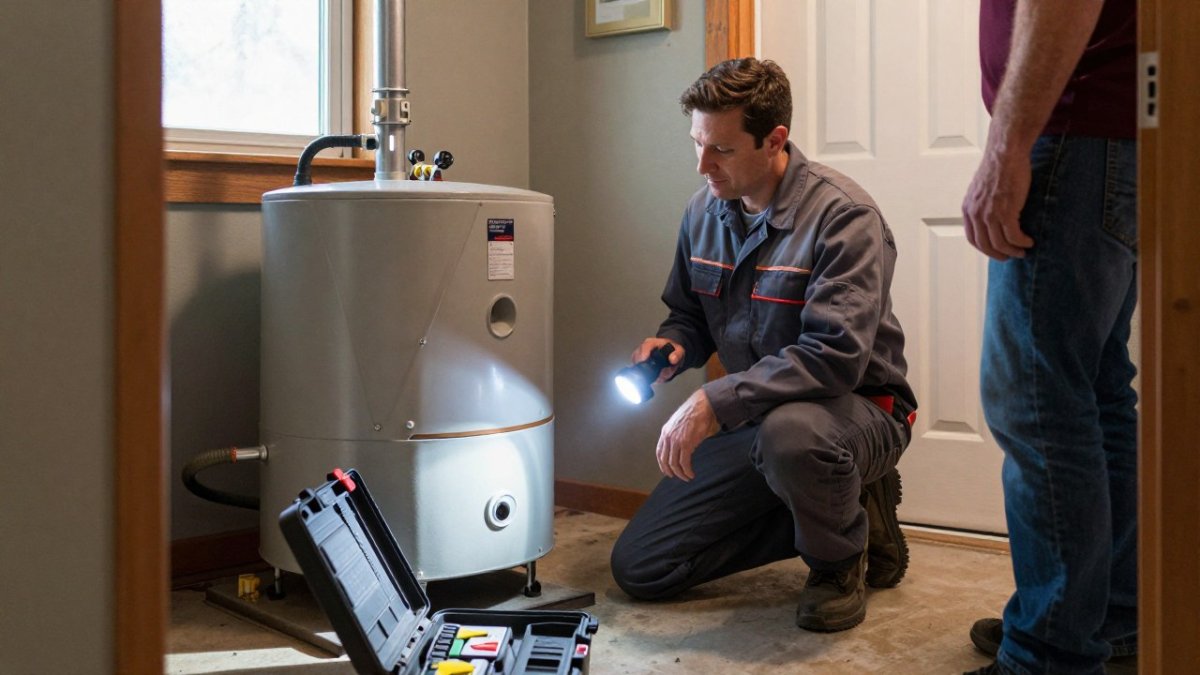
An emergency HVAC repair call is warranted when the situation is unsafe, temperatures are dangerous, or the system has failed completely during extreme weather. Emergency service is available around the clock, because heat loss in a New England winter is not something you can wait out.
Call immediately if you smell gas, see a yellow flame or soot, hear sustained banging from the boiler, or have no heat when outdoor temperatures are below freezing. The same goes for a complete AC failure during a heat wave, especially if anyone in the home is elderly or has health conditions.
If you're facing an after-hours heater failure, our guide to 24 hour heater repair near me covers the immediate steps and what to expect on cost. For everything else, our full list of heating and cooling services shows exactly what we handle so you book the right visit the first time.
HVAC Maintenance in Mansfield, MA: The Cheapest Repair Is the One You Avoid
Regular HVAC maintenance is the least glamorous part of home comfort and the one that saves the most money. A seasonal tune-up catches worn parts, dirty burners, and low refrigerant before they become a mid-January breakdown.
Homeowners who've skipped maintenance for years often ask whether it's too late to start. It usually isn't, but the first visit may uncover a backlog of small issues.
Our article on seasonal HVAC tune-ups for better system efficiency explains what a proper tune-up includes and when to schedule it so you're ahead of the rush.
Repair, Replace, or Upgrade: Making the Call on Older Equipment
The repair-versus-replace decision is where homeowners most often feel pressured. The right answer depends on four things: equipment age, repair frequency, efficiency loss, and how the repair estimate compares to a new system's cost.
Start with age. Equipment lifespans vary by make, model, and maintenance history. Ask your technician for an honest estimate of how much life your specific system has left.
Then weigh repair frequency. One failed igniter or capacitor on a 12-year-old furnace is normal wear.
Efficiency is the quiet factor. An older furnace may run at 65 to 70 percent annual fuel utilization efficiency (AFUE), while modern furnaces are generally more efficient than older models.
Refrigerant rules can affect AC and heat pump decisions. Older systems may face limits on refrigerant availability, so ask your technician about options.
Use this framework to organize the conversation:
| Situation | Recommended path | What to ask the technician |
|---|---|---|
| Under 10 years old, first repair | Repair | Is this a wear item or a sign of a deeper problem? |
| 10-15 years old, minor repair | Repair | What is the expected remaining life of this component? |
| 15+ years old, major repair | Get a replacement quote before approving | What is the installed cost versus the repair, and what efficiency gain comes with replacement? |
| Repeated repairs in one season | Replace | How many more repairs should I expect this year? |
| Rising bills, uneven comfort | Evaluate upgrade or duct work | Is the problem the equipment, the ducts, or both? |
| R-22 system with a leak | Replace | What is the cost to retrofit versus replace? |
When weighing replacement, ask whether a duct assessment is included, since ductwork condition affects how well a new system performs. Heating and cooling decisions can also be separate, so evaluate each system's condition on its own.
If you are considering a ductless mini-split for an older Cape or a home with additions, the answer is usually yes, because mini-splits do not need ductwork.
Finally, ask for the repair estimate and the replacement estimate in writing on the same visit. A technician who will not put both in front of you is selling, not advising.
What Transparent Pricing and a Real Service Visit Look Like
Pricing is a common concern for homeowners, and knowing the cost before work begins helps. A transparent visit is not a promise of a low price; it is a promise that you will understand the price before you approve the work.
A repair estimate may include a diagnostic fee, labor, parts, and any after-hours charges. Ask for each item to be itemized before work begins.
A thorough diagnostic visit should identify the cause of the problem before any work is recommended. If a visit ends without a clear explanation of what was tested, ask what was checked.
Watch out: a quote given before any diagnostic testing is a guess, and a guess that favors the most expensive repair is a red flag.
Before work begins, ask for the diagnosis, the repair options, the expected timeline, and whether any part is under warranty, in writing.
Ask about response windows when you book, so you know when to expect a technician.
Our straightforward pricing page lists our service-call rate and notes that installs come with free estimates. Our approach is to diagnose the system, explain the findings, and get your approval before starting work.
The bottom line on pricing is that you should understand the cost before you approve a repair. Ask for the full cost breakdown before you book, and expect the invoice to match the quote.
Frequently Asked Questions
How do I know whether I need heating service or AC repair?
It comes down to which system is running and what it is doing wrong. If the furnace or boiler is on and the house stays cold, you hear banging or rumbling, or you smell oil or gas, you need heating service. If the AC runs but the air is warm, airflow is weak, or you see water pooling near the indoor unit, that is AC repair. Seasonal timing usually settles it, but a heat pump can blur the line, so describe the symptoms when you call.
What are common signs that a furnace or boiler needs heating repair in Mansfield, MA?
Watch for heat that never reaches the thermostat setting, short cycling, a yellow instead of blue burner flame, soot or a fuel smell, banging and rumbling pipes, or a boiler that keeps losing pressure. Any fuel odor or carbon monoxide alarm means shut the system down and call for emergency service. Smaller signs like uneven room temperatures or a rising oil bill are worth a heating repair visit before they turn into a no-heat night in January.
Should I repair or replace my heating or cooling system?
Age and repair history decide most cases. Equipment that is aging and has needed a second major repair in two seasons often costs more to keep than to replace. A single failed part on a system under 10 years old is almost always worth fixing. Ask for a written repair estimate and a replacement quote side by side so you can compare on real numbers, not pressure.
When should I call for emergency HVAC repair in Mansfield, MA?
Call immediately for a gas or oil smell, a carbon monoxide alarm, no heat when outdoor temperatures are below freezing, water leaking from a boiler or AC unit, or any burning smell from the equipment. Those are safety issues, not comfort issues. For a system that is simply not keeping up, same-day service is usually enough. Keep the number saved before winter so you are not searching for it at 2 AM on a Sunday.

Need HVAC service in Mansfield, MA?