
How Long Central AC Installation Takes and What to Expect
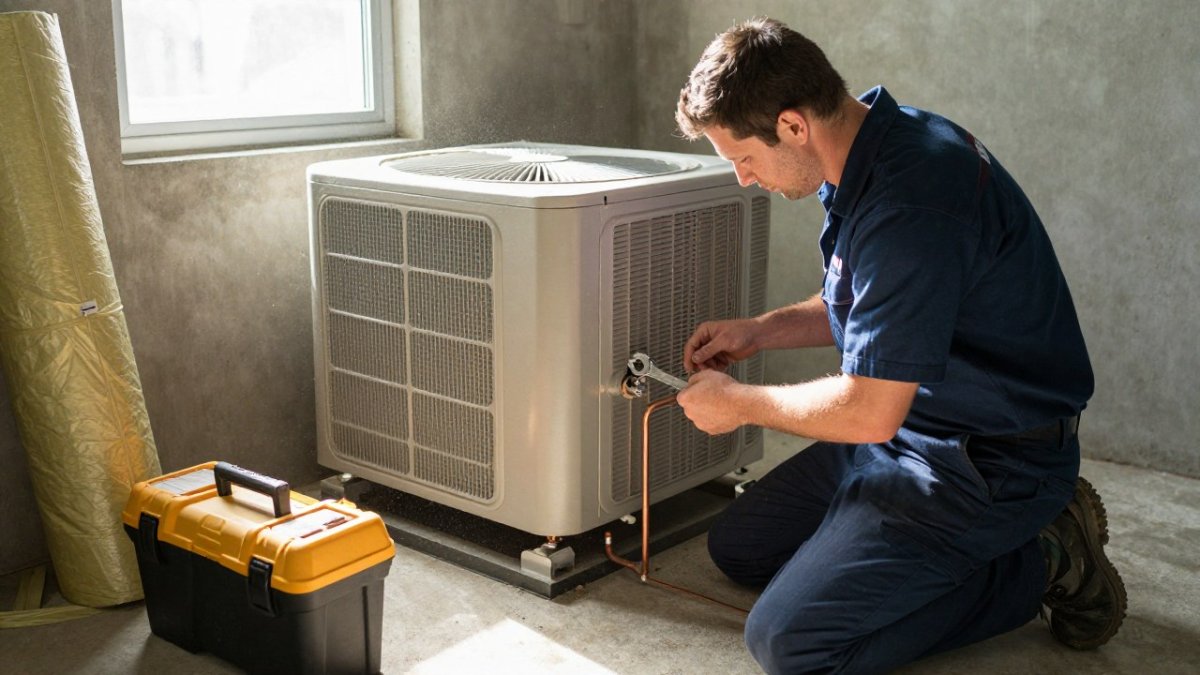
Last Updated: November 14, 2026
Quick Summary
Most central AC installation takes 4 to 8 hours for a straightforward replacement with existing ductwork, making a standard swap a one-day job. A first-time central AC installation with new ductwork, electrical work, and permits can take 1 to 3 days. Replacing both the AC and furnace together typically takes 1 to 2 days.
- A straight replacement with existing ductwork usually runs 4 to 6 hours on site.
- Replacement with minor duct or electrical fixes typically takes 6 to 8 hours.
- A full HVAC replacement of AC plus furnace usually takes 1 to 2 days.
- Ask how many technicians will be on site, since crew size affects the calendar day.
- Confirm the unit is on hand or has a firm delivery date before the crew is scheduled.
Table of Contents
- How Long Central AC Installation Takes: The Short Answer
- The Central AC Installation Process, Step by Step
- How Long Does It Take to Install Central Air With Existing Ductwork?
- How Long Does It Take to Install a New AC Unit and Furnace?
- Same-Day AC Replacement: When It Is Possible
- What Makes Central AC Installation Take Longer
- A Practical Estimate Checklist for Your Home
- Request a Clear Installation Quote for Your Home
- Frequently Asked Questions
How Long Central AC Installation Takes: The Short Answer
Most central AC installations take 4 to 8 hours for a straightforward replacement. That is the answer, and it is the one most homeowners want before they call anyone. A standard swap is typically a one-day job, and the day is long but not chaotic.
The catch is that "central AC installation" covers many work. A simple remove-and-replace is not the same as a first-time install with new ductwork. Here is the honest breakdown:
| Job Type | Typical Time | What Drives It |
|---|---|---|
| Straight replacement, existing ductwork | 4-6 hours | Same-size unit, good access |
| Replacement with minor duct or electrical fixes | 6-8 hours | Extra fittings, line set changes |
| First-time central AC install | 1-3 days | New ductwork, electrical, permits |
| Full HVAC replacement (AC plus furnace) | 1-2 days | Two systems, shared components |
The U.S. Department of Energy's guide to home cooling systems notes that proper sizing and installation affect efficiency more than the equipment itself. That is worth remembering when a crew quotes you a number on the phone.
Below, we walk through the actual installation day, what stretches the timeline, and how to spot a realistic estimate from a rushed one.
The Central AC Installation Process, Step by Step
A standard installation day follows a predictable sequence. Knowing it helps you plan around the crew and understand why the job takes as long as it does. A first-time install or a job with duct and electrical work adds stages and hours.
From Equipment Delivery to System Commissioning
Here is the order of work on a typical day, with realistic time bands:
- Equipment delivery and staging. The crew unloads the condenser, air handler or coil, and any line-set materials, then lays floor protection and sets up a work zone. If the equipment was special-ordered, confirm it arrived before the crew does; a missing coil can idle the whole day.
- Old unit removal. This covers refrigerant recovery, disconnecting the line set and electrical, and hauling the old equipment out. Refrigerant recovery is a regulated step and cannot be rushed; a crew that skips recovery or vents refrigerant is breaking the law.
- Site prep and new pad or bracket. The outdoor unit needs a level base with the clearance the manufacturer specifies, and the disconnect must be within sight of the unit.
- Indoor unit and coil install. The air handler or evaporator coil goes in and is connected to the supply and return ductwork. Matching the coil to the condenser matters here; a mismatched coil undermines the efficiency rating you paid for.
- Refrigerant lines and electrical connections. New line sets are run and brazed, the lines are pressure-tested and evacuated, and the electrical disconnect is wired. Evacuation is the step that removes moisture and air from the lines; skipping it shortens compressor life.
- Ductwork checks and adjustments. The crew seals accessible gaps, confirms the return path is adequate, and checks that supply registers deliver air where intended.
- System commissioning. This is the step that separates a good install from a rushed one, and it is where a homeowner should ask what was measured.
System commissioning is the process of verifying that the new equipment actually works as designed.
Watch out: if the crew leaves without pulling a vacuum on the line set or without recording the refrigerant charge, the system may cool for a season and then fail early. That is a warranty problem you will be arguing about later.
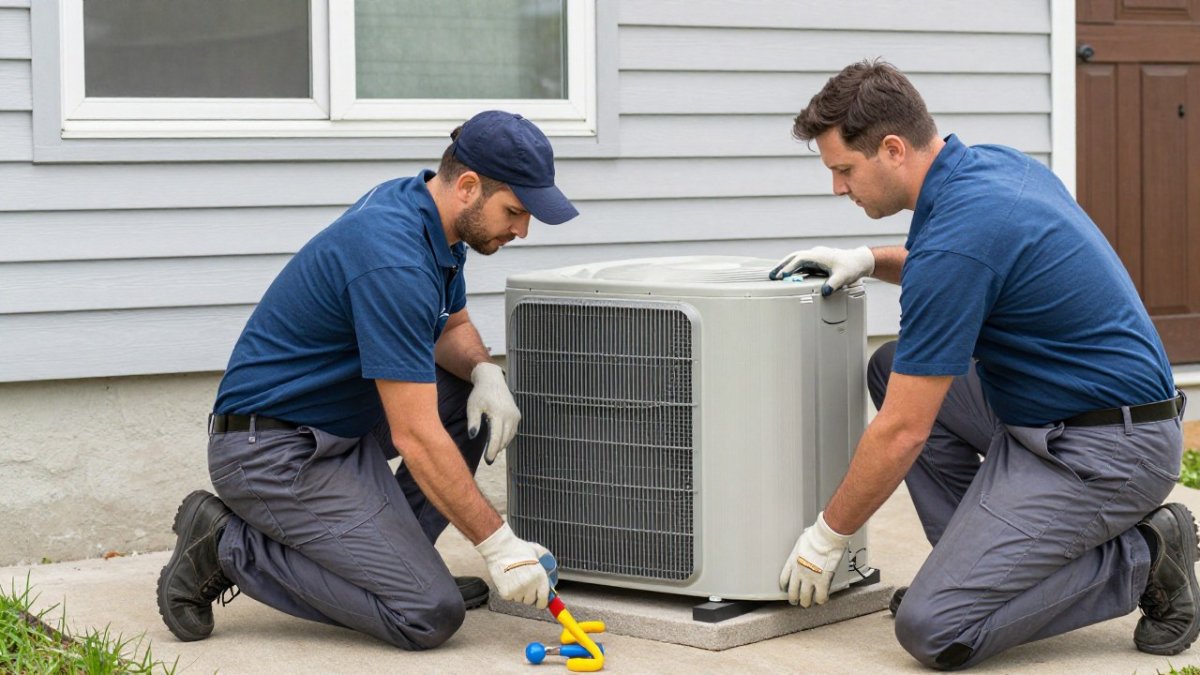
How the Day Actually Sequences
The order above is not arbitrary. Removal comes first because the new coil and line set connect to the same space. Electrical and line-set work happen before the indoor unit is closed up so the crew is not reopening finished work.
In practice, a two-person crew can overlap stages: one technician can stage the outdoor unit while the other recovers refrigerant. When you compare quotes, ask how many technicians will be on site; crew size is one of the biggest levers on the calendar day, and it is rarely written into the estimate.
How Long Does It Take to Install Central Air With Existing Ductwork?
With usable existing ductwork, the crew can focus on the equipment swap and connections.
But existing ductwork is not automatically good ductwork. A common mistake is assuming old ducts are fine because air still comes out of the vents. Leaky joints, crushed runs, and undersized returns can all hurt performance on a new system.
Ask your contractor to inspect the ducts before install day. If minor sealing or a small modification is needed, add an hour or two. If major duct replacement is required, the job can stretch to multiple days. For a deeper look at the full furnace side of the timeline, see how long furnace installation takes.
How Long Does It Take to Install a New AC Unit and Furnace?
Replacing both the AC and the furnace is often handled together, since the two systems share components.
Pairing the jobs makes sense when both units are aging out together. It also means one permit, one inspection, and one crew on site instead of two.
Same-Day AC Replacement: When It Is Possible
It is not realistic when:
- The new system is a different size or type
- The electrical service needs an upgrade
- Ductwork needs significant repair
- A permit or inspection must happen first
What Makes Central AC Installation Take Longer
Several factors push a job past the one-day mark, and it helps to sort them into two buckets: things that lengthen the workday and things that lengthen the calendar. A quote that only addresses the first bucket will leave you surprised by the second.
Factors That Lengthen the Workday
- Ductwork repairs or replacement. Sealing accessible joints and replacing a short run can add an hour or two. Replacing trunk lines or adding returns can add a full day or more.
- Electrical upgrades. An older panel may need a new circuit, a disconnect, or a service upgrade. Panel work often requires its own permit and a separate trade.
- Refrigerant line replacement. Long runs, inaccessible routing, or a line set that cannot be reused add hours. Reusing an old line set with a new refrigerant is sometimes not permitted; the crew should tell you which applies.
- Tight site access. Crawl spaces, attic air handlers, and narrow side yards slow every stage. A condenser that has to be carried through a basement or over a fence adds time before work even starts.
- Old-home quirks. Odd layouts, past DIY work, and undersized returns can complicate connections and force on-the-spot problem solving.
- Crew size and experience. A two-person crew working a familiar system moves faster than a single technician on an unfamiliar layout. Ask how many technicians will be on site.
Factors That Lengthen the Calendar
These are the delays that happen around the workday, and they are the ones homeowners most often underestimate.
- Permits. Many jurisdictions require a permit for HVAC replacement, and the permit must usually be issued before work begins. Processing time varies by office; a permit that takes a few business days can push a Friday install into the following week.
- Inspections. An inspection typically follows the install, and the appointment may be days out. The inspection rarely delays your comfort, but it does delay project closeout and any rebate paperwork that depends on it.
- Equipment lead times. Standard sizes are often in stock locally; special-order units, high-efficiency models, and equipment during peak season can take longer. Confirm the unit is on hand or has a firm delivery date before the crew is scheduled.
- Contractor scheduling. In peak summer, crews book out further. A job quoted as a one-day install can still sit on the calendar for a week or two before that day arrives.
- Weather. Rain does not usually stop indoor work, but it can delay outdoor condenser placement and electrical connections.
How to Separate Workday Time From Calendar Time
When you get an estimate, ask two questions: how many hours will the crew be on site, and how many days from signing to a running system? Those are different numbers, and a good contractor will give you both. Build a few days of buffer into your plan during the busy season, and confirm who pulls the permit and who schedules the inspection.
According to ENERGY STAR's guidance on hiring a contractor, confirming licensing and asking about permits upfront prevents surprises later. That advice applies directly to the calendar question: a contractor who handles permits and inspections routinely can tell you how long those steps take in your area, and one who does not may leave you chasing the inspection yourself.
A Practical Estimate Checklist for Your Home
Use this checklist before you accept any timeline. It turns a vague "about a day" into a real plan.
- Confirm the new unit size matches a proper load calculation, not just the old unit's label
- Ask whether the existing ductwork was inspected and sealed
- Confirm whether a permit is required and who pulls it
- Ask if the electrical panel can handle the new system
- Get the refrigerant line plan in writing
- Confirm the commissioning steps included (charge, airflow, thermostat test)
- Ask about equipment lead time and crew availability
- Get the cleanup and old-equipment haul-away in the quote
Sizing deserves its own check. If you are unsure what your home needs, our guide on what size central AC you need walks through the load factors that matter. A right-sized unit installs faster and runs better.
Request a Clear Installation Quote for Your Home
The best way to know how long your install will take is a quote based on your actual home. Pricing depends on the scope of the work, so request a quote for current details.
At Oil gas heating ac cooling service and installation, we are MA licensed, fully insured, EPA 608 certified, and oil burner licensed. We serve homeowners across Mansfield and the South Shore with oil and gas furnaces, boilers, central AC, and ductless mini splits.
A central AC installation should not feel like a gamble. Get a timeline you can plan around, a crew that shows up, and a system that is commissioned right the first time.
Frequently Asked Questions
Can central AC installation be done in one day?
A straightforward central AC replacement in a home with existing, usable ductwork is often completed in a single day. Projects that add ductwork modifications, electrical upgrades, or a full system replacement may take longer. Request a quote for an estimate based on your home.
Does central AC installation include removing the old unit?
Old unit removal is commonly part of a replacement. Ask your contractor to confirm in the written quote whether disposal is included.
What happens during the final test of a new central AC system?
After installation, a complete commissioning pass typically includes checking the refrigerant charge and airflow and confirming the thermostat is wired correctly. A contractor who skips it leaves you with a system that may run but never cool properly, so ask for the test results before the crew leaves.
What factors can make central AC installation take longer?
Ductwork that is undersized, leaking, or routed for an older system often needs modification. Electrical panels that cannot handle the new equipment require an electrician. Permit processing and inspection scheduling can add calendar days even when the physical work is quick. Site access, attic or crawlspace conditions, and whether you choose a like-for-like replacement or a full system upgrade all affect how long central AC installation takes.

Need HVAC service in Mansfield, MA?