
7 Steps to Check for Carbon Monoxide Near a Furnace
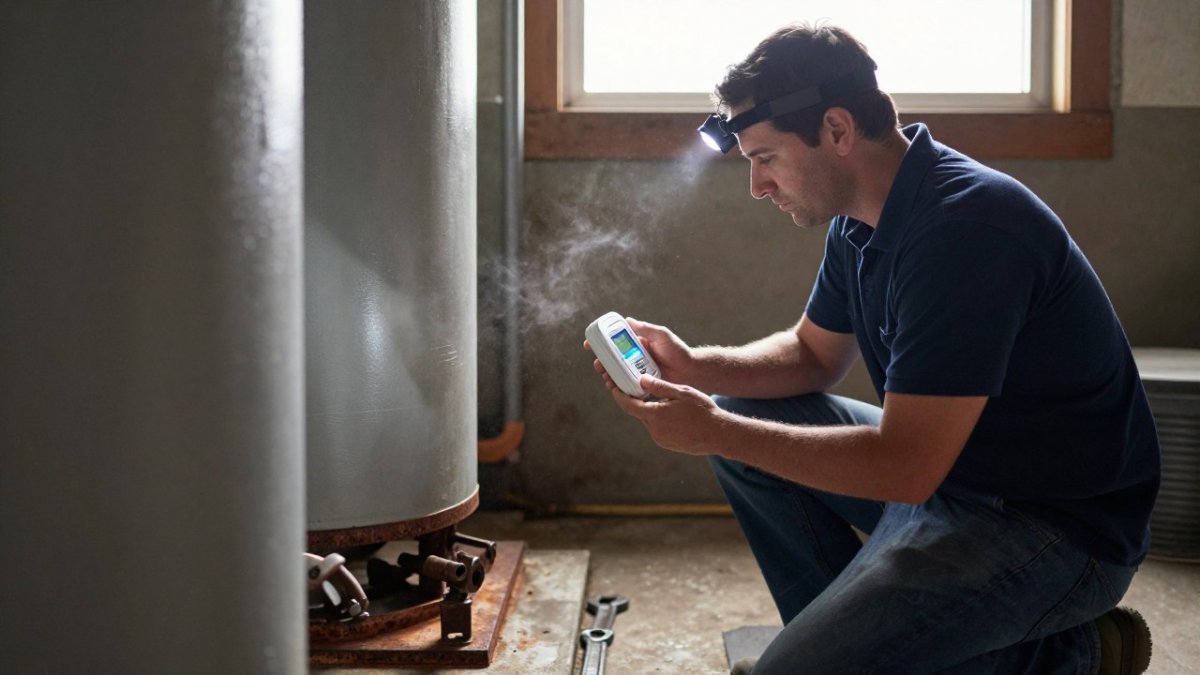
Last Updated: November 10, 2026
Quick Summary
You cannot detect carbon monoxide with your senses, so use a UL-listed CO alarm placed high on a wall or ceiling in the hallway outside the furnace room, and call a technician for combustion testing with a calibrated analyzer at the furnace's test port. A silent alarm does not prove the furnace is safe, which is why annual professional testing matters.
- Symptoms like headaches, dizziness, and nausea that ease when you leave home can signal CO exposure.
- A yellow or orange flame and soot stains around the burner or vent point to incomplete combustion.
- Test CO alarms monthly and replace batteries as the manufacturer directs.
- If an alarm sounds, get everyone and pets outside, then call 911 from outside.
- Only a technician should open the furnace cabinet, inspect the heat exchanger, or run combustion testing.
Table of Contents
- Signs of Carbon Monoxide From a Furnace
- How to Test for Carbon Monoxide in a Home
- Carbon Monoxide Detector Placement Near a Furnace
- What to Do If a Carbon Monoxide Alarm Goes Off
- What Homeowners Can Safely Check vs. What Requires a Technician
- Step-by-Step: What a Professional Furnace Inspection Covers
- Schedule Your Furnace Safety Inspection
- Frequently Asked Questions
Signs of Carbon Monoxide From a Furnace
Carbon monoxide is a colorless, odorless gas that gives no warning before it builds up. At Whole Home Comfort Systems, we tell every homeowner the same thing: your body and your eyes are often the first detectors, long before an alarm sounds.
The U.S. Consumer Product Safety Commission notes that fuel-burning appliances are a leading source of accidental CO exposure in homes. A gas furnace is one of them. When combustion goes wrong or venting fails, CO can seep into living spaces instead of heading outdoors.
Physical Symptoms You Should Never Ignore
Carbon monoxide poisoning symptoms often mimic the flu. That similarity is exactly what makes CO so dangerous.
Watch for these signs, especially when they appear only at home and ease when you leave:
- Headaches that come on during heating season
- Dizziness or feeling lightheaded
- Nausea without a clear cause
- Shortness of breath or chest tightness
- Confusion, drowsiness, or trouble concentrating
- Symptoms that hit several family members at once
If everyone in the house feels sick and pets seem off too, treat it as a CO warning until proven otherwise. Get outside and call for help.
Visual Warning Signs: Soot, Flame Color, and Corrosion
Your eyes can catch problems your nose never will. Check these visual clues around the furnace:
- Soot stains around the burner area or vent connections
- A yellow or orange flame where a steady blue flame should burn
- A flickering or unstable flame that lifts off the burner
- Rust or corrosion on the flue pipe or heat exchanger
- Moisture or condensation on windows near the furnace
A yellow pilot light or orange flame signals incomplete combustion, which produces more CO. Soot stains point to a venting or burn problem. Neither is something to shrug off.
How to Test for Carbon Monoxide in a Home
You cannot test for carbon monoxide with your senses. Proper CO testing requires a detector or a technician's combustion analyzer. Here is the honest breakdown.
Homeowners have two realistic options:
- Use a UL-listed CO alarm. Press the test button monthly and trust it to warn you. This is a warning device, not a measurement tool.
- Call a technician for combustion testing. A qualified heating contractor uses a calibrated analyzer at the furnace's test port to read actual CO levels in parts per million (ppm) in the flue gas.
A plug-in CO detector tells you whether CO is present in the air. It does not tell you how well your furnace is burning fuel. That gap is why annual professional testing matters. The U.S. Environmental Protection Agency explains that CO levels and exposure risk depend on appliance condition and ventilation, not just whether a detector beeps.
Carbon Monoxide Detector Placement Near a Furnace
Where you put your CO detector decides whether it warns you in time. Place a CO alarm on the ceiling or high on the wall in the hallway outside the furnace room, and on every level of the home. Put one near each sleeping area so it can wake you.
A few placement rules that matter:
- Keep detectors away from the furnace itself to reduce false alarms from normal trace exhaust
- Do not mount one directly above or beside the furnace
- Avoid dead-air corners and spots behind furniture
- Test every unit monthly and replace batteries as directed
Follow the NFPA carbon monoxide safety guidance for placement and alarm response. Detector placement near a furnace is about catching a leak early, not measuring combustion quality.
How to Use and Interpret a Household CO Detector
A CO alarm is a warning device, not a diagnostic tool. Understanding what it can and cannot tell you is the difference between false confidence and real safety.
Alarm behavior you should know:
- A UL-listed CO alarm is designed to avoid nuisance alarms from trace levels, so it may not sound at low concentrations that still matter over long exposure.
- A chirp every minute or so usually means a low battery or end-of-life signal, not a CO event. Check your model's manual to confirm the pattern.
- A continuous alarm means CO has reached a level the alarm considers dangerous. Treat it as real.
- Some models display a ppm reading. A display showing 0 does not prove the furnace is safe, it only means the sensor at that location has not detected CO at that moment.
Testing and maintenance:
- Press the test button monthly. This verifies the alarm circuit and speaker, not the CO sensor's calibration.
- Replace batteries as the manufacturer directs, or whenever the low-battery signal sounds. Check your model's manual for its end-of-life date and replacement schedule.
- Vacuum the alarm's vents periodically to remove dust that can block the sensor.
- Replace the entire alarm according to the manufacturer's replacement date.
The limits of consumer detectors:
A silent alarm does not mean your furnace is safe. Consumer CO alarms are placed in living spaces, not at the furnace, and they are calibrated to avoid nuisance alarms.
Never remove the batteries from a CO alarm because it keeps chirping, and never move an alarm to stop nuisance alarms without first having the furnace inspected.
What to Do If a Carbon Monoxide Alarm Goes Off
Treat every alarm as real until proven otherwise. Get everyone, including pets, outside into fresh air immediately. Do not stop to open windows or hunt for the source.
Then follow these steps:
- Call 911 or your local fire department from outside.
- Do not re-enter until responders clear the home.
- If anyone has symptoms, seek medical care and say you suspect CO exposure.
- Once cleared, have a qualified technician inspect the furnace and venting before you run heat again.
If you need emergency help, contact our team for 24/7 heating support. For a closer look at emergency steps and costs, see our guide on 24 hour heater repair.
Watch out: never ignore a chirping or tripped alarm because you "feel fine." CO affects people differently, and a false alarm is far cheaper than the alternative.
What Homeowners Can Safely Check vs. What Requires a Technician
Some checks are safe for any homeowner. Others can put you in danger or void your system's safety. Here is where we draw the line.
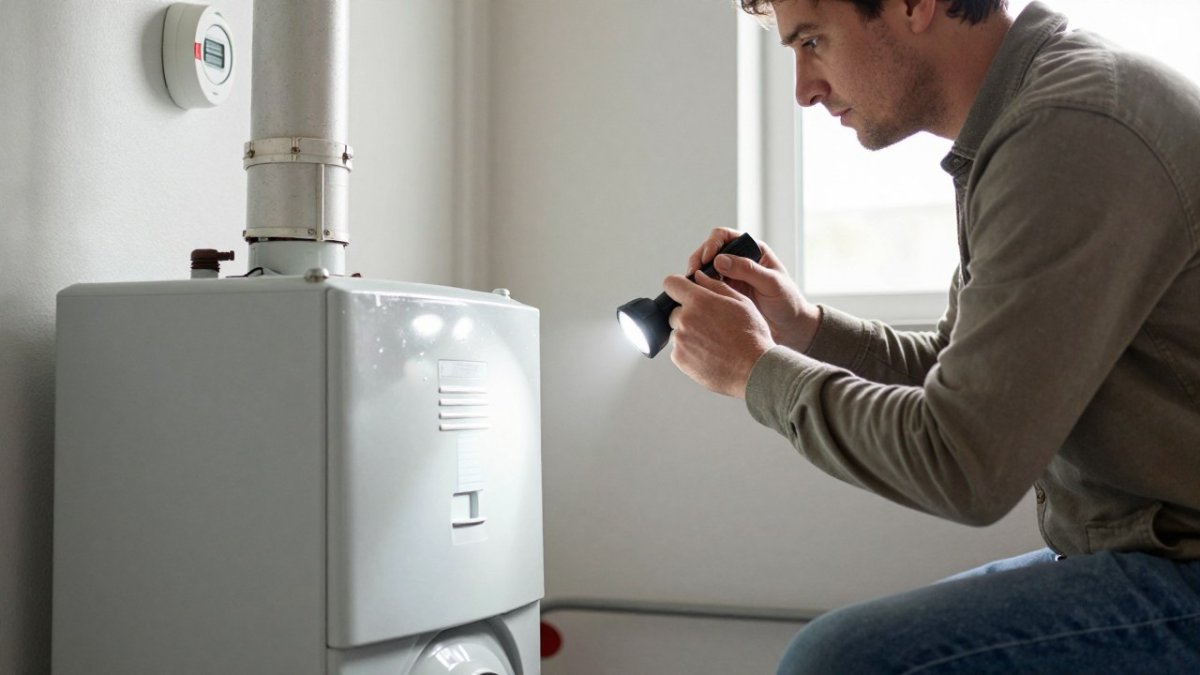
Safe for you to do:
- Test CO alarms monthly
- Replace detector batteries as directed
- Keep the furnace area clear and unblocked
- Change air filters on schedule
- Look for soot, rust, or a yellow flame (from a distance)
- Confirm vents and flue pipes are not visibly blocked
Leave to a technician:
- Opening the furnace cabinet or burner assembly
- Inspecting the heat exchanger for cracks
- Combustion testing and exhaust measurement
- Repairing or resealing flue and venting
- Any gas line work
If you want to know what a safety inspection includes and what it costs before booking, our guide on affordable HVAC safety inspections walks through it. For transparent service pricing, see our straightforward pricing page.
Step-by-Step: What a Professional Furnace Inspection Covers
A professional furnace inspection follows a clear sequence. Here is what a qualified technician does during a safety visit, and what the measurements actually mean.
- Visual inspection. Check the furnace, flue, and vent connections for soot, rust, and corrosion.
- Heat exchanger check. Look for cracks or holes that could leak CO into the air supply. This often requires removing the blower or using a camera to inspect areas not visible from the outside.
- Combustion testing. Insert a calibrated analyzer at the test port and measure CO and oxygen levels in ppm.
- Exhaust measurement. Confirm flue gases are venting outdoors, not spilling back inside.
- Vent and flue review. Verify the flue is clear, sealed, and correctly sized.
- Detector check. Confirm CO alarms are present, placed well, and working.
Expected result: you get a clear read on whether your furnace is burning safely and venting correctly. If something fails, you learn it before it becomes an emergency.
Interpreting the Measurements: Ambient Air vs. Exhaust
The numbers a technician reads come from two different places, and mixing them up is a common source of confusion.
Ambient-air readings are taken in the room or in the supply air. These are the levels you and your family would breathe.
Exhaust or flue-gas readings are taken at the furnace's test port, before the gases leave the home.
Why units matter: CO is measured in parts per million (ppm).
What a proper inspection includes:
- A calibrated combustion analyzer, not a handheld consumer detector
- Measurements taken both at the test port and in the ambient air
- A comparison against the appliance manufacturer's specifications
- A written record of the readings so you can track changes year to year
A professional safety visit follows a set sequence, and each step checks a different part of the system.
| Step | What the technician does |
|---|---|
| Visual inspection | Checks furnace, flue, and vent connections for soot, rust, corrosion |
| Heat exchanger check | Looks for cracks or holes that could leak CO |
| Combustion testing | Uses calibrated analyzer at test port to measure CO and oxygen |
| Exhaust measurement | Confirms flue gases vent outdoors, not spilling inside |
| Vent and flue review | Verifies flue is clear, sealed, and correctly sized |
| Detector check | Confirms CO alarms are present, placed well, working |
Schedule Your Furnace Safety Inspection
A furnace that runs quietly all winter can still hide a CO problem.
At Whole Home Comfort Systems, we are MA licensed, fully insured, and EPA 608 certified, and our oil burner licensing covers oil-fired equipment.
Get started with Whole Home Comfort Systems and book a furnace safety inspection that protects your home and your budget.
Your furnace works hard all winter, and CO gives no warning when something fails. A professional safety inspection finds the problems your eyes and nose cannot.
Frequently Asked Questions
Can a furnace leak carbon monoxide even if it seems to be working normally?
Yes. Carbon monoxide is an odorless, colorless gas, so a furnace can leak CO without any obvious signs like smell or visible smoke. A cracked heat exchanger or a blocked flue can allow CO to enter your home even while the furnace heats normally. This is why annual professional inspection and working CO detectors are essential. If your detector alarms or you notice soot, yellow flames, or flu-like symptoms, treat it as a potential CO problem and act immediately.
Can I use my phone to detect carbon monoxide?
No. Smartphones do not have carbon monoxide sensors. Apps that claim to detect CO rely on external hardware or are inaccurate. The only reliable way to detect carbon monoxide in a home is with a certified CO detector or a professional combustion analyzer used by a qualified HVAC technician. Rely on UL-listed CO alarms placed correctly and tested regularly, and never substitute a phone app for a real detector.
How do I know if my carbon monoxide detector is placed correctly near the furnace?
Place CO detectors on every level of your home, including the basement or furnace room, and outside each sleeping area. For a furnace, mount the detector away from the appliance to reduce false alarms from start-up exhaust, and follow the manufacturer's instructions for height. Test the alarm monthly and replace the battery as the manufacturer directs. Replace the unit according to the manufacturer's replacement date.
What should I do if my carbon monoxide alarm goes off but I don't smell anything?
Carbon monoxide has no smell, so you cannot rely on your nose. If the alarm sounds, immediately move everyone (including pets) outside to fresh air, call 911 or your local fire department from a safe location, and do not re-enter until emergency responders clear the home. Then contact a qualified HVAC technician to inspect your furnace and venting. Never ignore an alarm or assume it is a false alarm without professional verification.

Need HVAC service in Mansfield, MA?