
How to Fix a Boiler Leaking Water From the Bottom
Last Updated: November 5, 2026
Quick Summary
A boiler leaking water from the bottom is usually a serious problem that needs prompt attention. Turn the boiler off, protect the floor, and call a licensed technician, because the leak can damage the unit and signal a safety fault.
- Turn the boiler off at its power switch or thermostat first.
- Shut off the gas supply if you smell gas, and leave if the smell is strong.
- Place a towel or tray under the drip and take photos of the leak.
- Do not block the relief valve discharge pipe or open sealed components.
- Call a licensed technician and note when the water appears and the pressure reading.
Table of Contents
- Is a Boiler Leaking Water From the Bottom an Emergency?
- What to Do First: A Safe Emergency Checklist
- Working Out Where the Water Is Coming From
- Why Is My Boiler Leaking Water From the Relief Valve?
- Boiler Leaking Water From the Overflow Pipe
- Common Causes: Pressure, Expansion Tanks and Corrosion
- When to Call a Technician and What to Document First
- Frequently Asked Questions
Is a Boiler Leaking Water From the Bottom an Emergency?
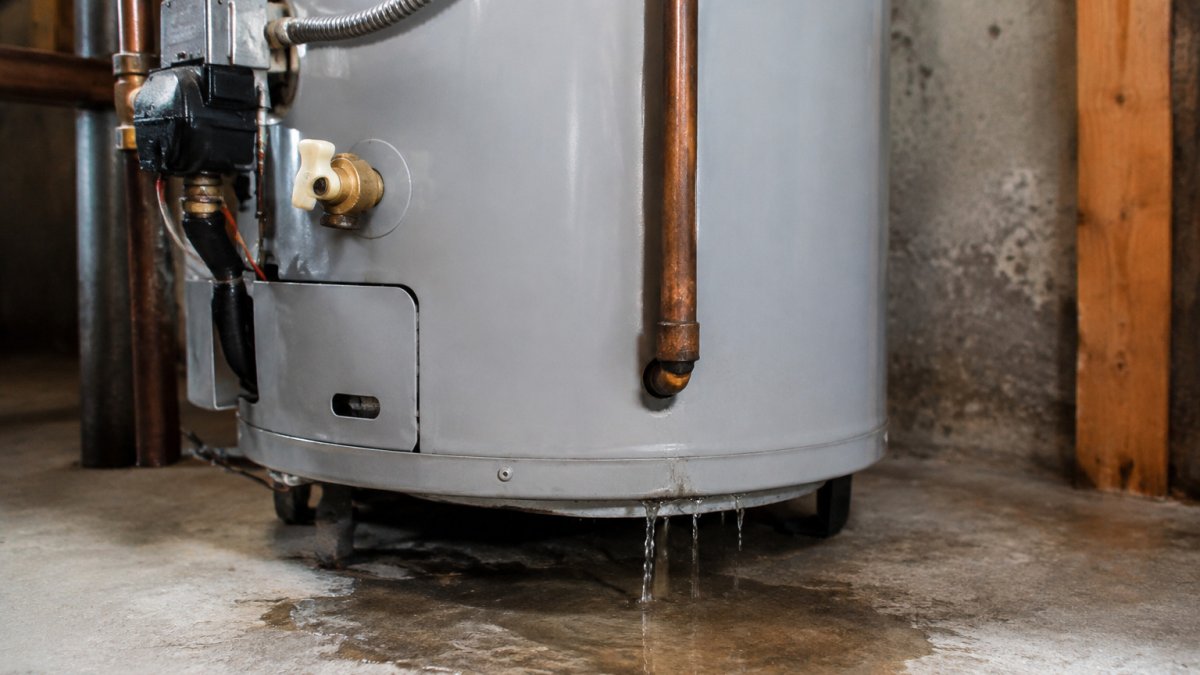
A boiler leaking water from the bottom is usually a serious problem, and you should act on it quickly. Water pooling under a boiler can damage the unit, the floor, and anything stored nearby.
Treat it as an emergency if the water is spreading, if you can smell gas or burning, if you see sparks or hear unusual noises, or if the boiler has lost pressure entirely.
Watch out: Do not assume a small puddle is harmless. Even a slow leak can rust a boiler's base and soak into the flooring over several days.
What to Do First: A Safe Emergency Checklist
Work through these steps in order before you touch anything else. Safety comes first, so stop if you feel unsure at any point.
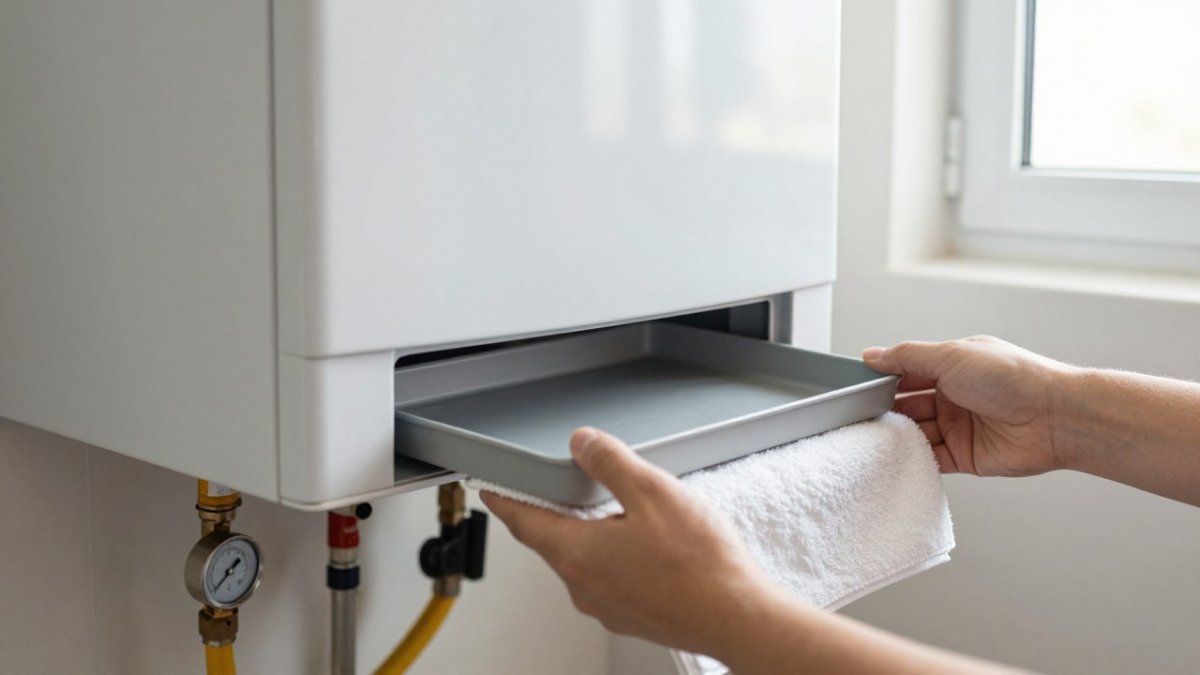
- Turn the boiler off at its power switch or thermostat.
- Shut off the gas supply valve if you smell gas, and leave the house if the smell is strong.
- Close the cold water supply valve feeding the boiler, if you can reach it safely.
- Place a towel or shallow tray under the drip to protect the floor.
- Take photos and note where and when the water appears.
- Call a licensed heating technician and describe what you see.
Do not open any sealed components or try to repair a pressurized part yourself. Hot water and steam can cause serious burns.
Working Out Where the Water Is Coming From
Finding the source of the water helps the technician diagnose the fault faster and can tell you how urgently to act. Dry the area first with a towel, then watch for where new water appears. The location and the timing of the leak are the two best clues you have.
Use this simple decision path to narrow it down before you call.
Water appears only when the boiler is heating
If the drip starts a few minutes after the burner fires and stops when the system cools, the leak is usually tied to thermal expansion. Metal pipes and fittings expand as they heat, which opens small gaps at joints, compression fittings, and valve packings. A dry paper towel traced along each joint while the system runs will show you which connection is weeping.
Water appears constantly, even when the boiler is off
A leak that never stops points to a supply-side problem rather than a heating-cycle problem. Check the cold water feed valve and the automatic fill valve first. A fill valve that is stuck open will keep adding water to the system and push it out through the relief valve or a weak seal. If the water is clean and cool, the source is likely on the domestic water side or the feed line rather than inside the boiler body.
Water runs down the side of the casing or from the base panels
Water that gathers under the boiler and runs along the lower panels often comes from inside the casing. Look for drips falling from the base or streaks running down the inside of the jacket. A leak here can point to a failed internal seal, a cracked heat exchanger, or condensation collecting from a faulty component. If the water is clean and warm, it usually comes from the heating system itself rather than a condensate line. If the water is rusty or dark, corrosion inside the boiler or pipes is the more likely cause.
Water comes from the relief valve discharge pipe
The pressure relief valve is a safety device that opens to release water when pressure gets too high. A small amount of discharge from it can be a warning sign rather than a failure. If the valve keeps releasing water, the cause is usually excess pressure, a failing expansion tank, or a valve that has worn out. Do not cap or block the discharge pipe. Blocking it removes the protection the valve provides and can create a dangerous pressure buildup.
Water comes from the overflow pipe
The overflow pipe carries water away when the system adds or releases too much. Water from this pipe usually means the system is over-pressurized or the feed valve is stuck open. It can also come from a faulty expansion tank that is no longer holding its cushion of air. Watch the pressure gauge while you wait for help. A reading that climbs steadily tells the technician the problem is in the pressure control, not a leak in the pipes.
Water appears at pipe joints and fittings near the floor
Check every pipe joint, valve, and fitting near the boiler, especially the lowest connections where water collects. Loose or worn connections drip most often when the system heats up and the pipes expand. Trace each connection with a dry paper towel. Wet paper shows you exactly where the water escapes, which saves time for the technician.
Watch out: Do not tighten a leaking fitting on a hot, pressurized system. Let the boiler cool, and leave any sealed component to a licensed technician. Hot water and steam can cause serious burns.
Why Is My Boiler Leaking Water From the Relief Valve?
The pressure relief valve is a safety device. It opens to release water when pressure gets too high, so a small amount of water from it can be a warning sign. Discharge from the valve is not always a sign of failure, but it should never be ignored.
A relief valve that keeps releasing water often points to excess pressure, a failing expansion tank, or a valve that has worn out. Do not cap or block the discharge pipe. Blocking it removes the protection the valve provides.
Boiler Leaking Water From the Overflow Pipe
The overflow pipe carries water away when the system adds or releases too much. Water coming from this pipe usually means the system is over-pressurized or the feed valve is stuck open.
Watch the pressure gauge while you wait for help. A pressure reading that climbs steadily tells the technician that the problem is in the pressure control, not a leak in the pipes. Note the reading and the time so you can share both when you call.
Common Causes: Pressure, Expansion Tanks and Corrosion
Bottom leaks commonly come from a few causes. Understanding how each one works helps you describe the problem accurately and judge whether you are facing a small repair or a larger decision.
- High system pressure: Too much pressure forces water out through valves and seals. The pressure gauge should sit in the range marked by the manufacturer. A reading that keeps climbing after the boiler is off points to a pressure-control fault, not a pipe leak.
- A failed expansion tank: The expansion tank holds a cushion of air that absorbs the volume change as water heats. When that air charge is lost, pressure builds quickly and finds the weakest point to escape. A tank that is waterlogged or has a failed bladder is a common cause of repeated relief-valve discharge.
- Corrosion: Rust eats through the boiler tank, pipes, and fittings over time. Corrosion is more likely in older systems and in systems that have gone years without maintenance, where sludge and rust build up inside and speed wear on every part. Learn what a service visit includes and what it costs in Boiler Service Near Me: Costs, Checklist & Timing. Rust-colored water or staining around the base is a strong clue.
- Worn seals and gaskets: Heat and age make rubber parts crack and shrink. Gaskets at the boiler jacket, pump flanges, and valve stems are common drip points, and they are usually among the less expensive parts to replace.
- Cracked heat exchangers: A crack lets water escape from inside the boiler body. This is one of the more serious causes because it can affect combustion safety and often pushes the decision toward replacement rather than repair.
Repair or replace: what the decision usually turns on
A technician will weigh the boiler's age, the extent of corrosion, and the cost of the failed part against the cost of a new unit.
Watch out: Do not keep adding water to a system that keeps losing pressure. Repeated refilling can hide a growing leak and speed corrosion inside the boiler.
The article lists the main causes of a bottom leak and what each one looks like, which can be scanned at a glance.
| Cause | Key sign | Note |
|---|---|---|
| High system pressure | Gauge keeps climbing after boiler is off | Points to pressure-control fault |
| Failed expansion tank | Pressure builds quickly, repeated relief-valve discharge | Air cushion lost or tank waterlogged |
| Corrosion | Rust-colored water or staining at base | More likely in older, unmaintained systems |
| Worn seals and gaskets | Drips at jacket, pump flanges or valve stems | Often less expensive to replace |
| Cracked heat exchanger | Water escaping from inside the boiler body | Often pushes decision toward replacement |
When to Call a Technician and What to Document First
Call a licensed technician as soon as you see water under the boiler. Do not wait for the leak to get worse. You can reach our team through our book a boiler service page, or call (508) 562-1344 for emergency heating repairs at any hour.
Before the technician arrives, write down a few details so the visit goes faster:
- When you first saw the water and how often it appears
- The color and amount of the water
- The pressure gauge reading, if you can see it
- Any recent noises, smells, or changes in how the house heats
- When the boiler was last serviced
Clear notes and photos help the technician pinpoint the fault and recommend the right fix. Many repairs are straightforward once the source is known, while a corroded or cracked boiler may need replacement. A technician can tell you which path makes sense before any work begins.
Frequently Asked Questions
Is water leaking from a boiler an emergency?
It can be. A small, slow drip from a fitting may be manageable for a short time, but water pooling around a boiler, a leak that is getting worse, or any sign of electrical trouble makes it urgent. Turn off the boiler and isolate its power and water supply, then call a licensed heating professional. Do not wait to see if it stops, because water can damage flooring, wiring and the boiler itself within hours. If you smell gas or see scorching, leave the home and call your gas utility or emergency services first.
Can I keep using a boiler that is leaking?
In most cases, no. Running a leaking boiler can lower system pressure further, let air into the heating loop and damage the burner or electrical controls. A leak from the casing or a corroded section usually means the boiler needs repair or replacement, not just a temporary fix. Shut the unit down, keep the area dry, and schedule service before restarting it. Continuing to run it to avoid a cold house often leads to a larger repair bill.
Why is water coming from my boiler's overflow pipe?
The overflow or pressure relief discharge pipe opens when pressure in the system rises above its set limit. Water coming from it usually points to excessive pressure, a failing expansion tank, or a relief valve that is worn or stuck. Check the pressure gauge while the system is cold. If it reads above the manufacturer's recommended range, or the discharge keeps dripping after you have bled radiators, have a qualified technician test the valve and expansion tank rather than plugging or capping the pipe.
How much does it cost to fix a leaking boiler?
Cost depends on the source of the leak, the boiler's age and the parts involved. A worn fitting or pressure relief valve is often a modest repair, while a cracked heat exchanger or corroded boiler tank can make replacement the better financial choice. Ask for an itemized, written quote before work begins, and compare the repair price against the age and efficiency of the existing unit. Pricing varies, so contact our office for a current quote tailored to your system.

Need HVAC service in Mansfield, MA?