
Oil Furnace Replacement Cost With Installation Guide
Table of Contents
- Oil Furnace Replacement Cost With Installation: What Homeowners Actually Pay
- What the Installed Price Covers
- Furnace Unit and Installation Labor Cost Breakdown
- What Drives Your Replacement Cost Higher
- Oil Furnace Efficiency Ratings AFUE and What They Mean for Your Bill
- Signs You Need a New Furnace Before Winter Hits
- Oil to Gas Furnace Conversion Cost and Other Alternatives
- Oil Tank, Inspection, and Disposal Costs Most Quotes Miss
- Frequently Asked Questions
Last Updated: October 14, 2026
Oil Furnace Replacement Cost With Installation: What Homeowners Actually Pay
An oil furnace replacement with installation is a full project: equipment, removal and install labor, and often tank or venting work that shows up late. At Whole Home Comfort Systems, we have handled oil and gas heating across Mansfield and the South Shore for over 20 years, and homeowners who understand the full scope before they call get fewer surprises.
Pricing depends on your home, your existing system, and what the installer finds on site, so no responsible contractor quotes a firm number over the phone. Instead, we show you which line items drive the total so you can compare quotes fairly.
Below, we break down every cost component, the efficiency ratings that affect your bill, and the tank and disposal work most quotes leave out.
What the Installed Price Covers
The installed price is the total cost of a working furnace in your basement, not just the box. It bundles equipment, labor, and materials connecting the new unit to your ductwork, fuel line, and venting.
A complete installed quote typically includes:
- The furnace unit itself, sized in BTUs for your home
- Removal and disposal of the old furnace
- Labor for installation, wiring, and connections
Compare these line items, not just the bottom-line number. A low bid often excludes disposal, venting, or permits, and those costs reappear later.
Furnace Unit and Installation Labor Cost Breakdown
Equipment and labor are the two biggest components of any oil furnace replacement, and they move independently: unit price depends on size and efficiency, labor on how hard your home is to work in.
Equipment cost scales with heating capacity (BTUs) and efficiency (AFUE). A larger home needs a higher-capacity unit, and a high-efficiency condensing furnace costs more than a standard-efficiency model of the same size.
Labor cost depends on site conditions: a straightforward swap in an open basement takes far less time than a job with a narrow stairwell, corroded fuel lines, or a flue needing relining.
Equipment Options: Standard vs High-Efficiency Models
Standard- and high-efficiency oil furnaces differ mainly in how much heat they extract per gallon of fuel, which shows up in purchase price and annual operating cost.
| Option | AFUE Range | Upfront Cost | Best For |
|---|---|---|---|
| Standard-efficiency | Lower AFUE | Lower | Tight budgets, mild winters |
| High-efficiency | Higher AFUE | Higher | Cold climates, long-term savings |
A high-efficiency model costs more upfront, and whether it pays back depends on your fuel usage and how long you stay. In a cold climate with heavy heating demand, savings add up faster.
What Drives Your Replacement Cost Higher
Site conditions and system complexity push the price up more than equipment choice does. Two homes with identical square footage can get very different quotes.
The biggest cost drivers:
- Furnace size and heating capacity. A larger home needs more BTUs, which means a bigger, more expensive unit.
- Ductwork condition. Leaky, undersized, or mismatched ducts may need repair or replacement to work with the new furnace.
- Venting and chimney liner. Older flues often need a liner to safely handle a new furnace's exhaust.
Get a written, itemized quote to see which apply to your home, the only way to compare bids fairly.
Oil Furnace Efficiency Ratings AFUE and What They Mean for Your Bill
AFUE stands for Annual Fuel Use Efficiency, the percentage of fuel energy a furnace converts into usable heat over a typical heating season. A higher AFUE means less fuel escapes up the flue and more of every gallon heats your home. It is printed on the yellow EnergyGuide label and the manufacturer's spec sheet, so it is easy to verify before you sign.
What most cost guides skip is the step that matters: turning AFUE into dollars.
From AFUE to Annual Gallons
The math is straightforward once you know two inputs: your home's annual heating load (in BTUs) and the furnace's AFUE.
- Estimate your annual heating load. A shortcut is last winter's oil deliveries, if you burned roughly 700 gallons, that is your baseline. Your oil supplier can also provide a usage history.
- Convert gallons to BTUs. Heating oil delivers roughly 138,000 BTUs per gallon at the burner.
- Divide by AFUE to get the fuel the new furnace would consume.
A worked example using round numbers:
| Standard-Efficiency (lower AFUE) | High-Efficiency (higher AFUE) | |
|---|---|---|
| Annual heating load | 96,600,000 BTU | 96,600,000 BTU |
| AFUE | 0.80 | 0.90 |
| Gallons needed | ~875 | ~778 |
| Gallons saved per year | , | ~97 |
At roughly $3 to $4 per gallon, that ~97-gallon difference is on the order of $300 to $400 per year in fuel alone. Over a 15-year furnace life, the savings can exceed the upfront premium, but only if fuel prices stay in that range and you stay long enough to bank them.
The Payback Test
Before you pay more for a higher AFUE, run this test:
- Price premium = high-efficiency installed price minus standard-efficiency installed price.
- Annual savings = gallons saved × your delivered price per gallon.
- Payback years = price premium ÷ annual savings.
If payback runs longer than you plan to stay, the standard model is usually the smarter buy. If it comes in under your ownership window, the high-efficiency unit wins on total cost of ownership.
What Else Moves the Operating Number
AFUE is not the only lever. These factors change your real annual cost as much as the rating:
- Fuel price volatility. A payback that looks strong at $4 per gallon can stretch out at $2.50.
- Sizing. An oversized furnace short-cycles, wastes fuel, and wears out faster. A properly sized unit runs longer, steadier cycles and hits its rated AFUE.
- Duct losses. Leaky ducts in unconditioned space throw away a meaningful share of the heat produced, regardless of AFUE.
Signs You Need a New Furnace Before Winter Hits
Replacing a furnace on your schedule costs less than a mid-winter breakdown. Watch for these signs and act before the first cold snap.
Signs it is time to replace:
- The furnace is aging and needing more frequent repairs
- Heating bills are climbing without a change in usage
- Rooms never reach the temperature you set
A cracked heat exchanger is a safety issue, not just a performance one. If a technician flags it, treat replacement as urgent.
Never ignore soot, a yellow flame, or a fuel smell around an oil furnace. These can signal incomplete combustion or a cracked heat exchanger, which risks carbon monoxide. Shut the system down and call a licensed technician.
Oil to Gas Furnace Conversion Cost and Other Alternatives
Converting from oil to gas, or switching to a heat pump, changes the cost picture entirely. These are bigger projects than a straight replacement, and scope varies so much by home that a single national number is misleading. Here is the scope each option requires, so you can price it against a straight oil furnace replacement.
Oil to Gas Conversion
A gas conversion is not just a furnace swap. It typically includes:
- A gas line to the home, if natural gas is not already at the street. If it is not available on your street, this option may be closed to you entirely, confirm availability before you get quotes.
- A new gas furnace sized to your home's heat loss.
- New venting. Gas furnaces vent differently than oil, so the existing chimney or flue often needs modification or a new PVC vent for a condensing unit.
Because gas line and tank work dominate the budget, a conversion usually costs well above a like-for-like oil replacement. The payoff is operating cost: natural gas is typically cheaper per delivered BTU than heating oil, so the annual fuel bill drops. The question is how many seasons it takes to recover the conversion premium.
Heat Pump Conversion
A heat pump runs on electricity and can both heat and cool. In colder climates, the common setup pairs a cold-climate heat pump with a backup system (often the existing furnace or a new electric backup) for the coldest days.
Scope considerations:
- Electrical service. Older homes may need a panel upgrade or a new circuit to handle the heat pump and backup.
- Ductwork. A ducted heat pump uses existing ducts, but leaky or undersized ducts hurt performance. Ductless mini-splits avoid ducts entirely and suit homes without ductwork or with hard-to-heat additions.
- Incentives. Federal tax credits and many state and utility rebates apply to qualifying heat pumps (Home Upgrades). These can meaningfully offset the upfront cost, so check current programs before you compare.
Comparing the Options Side by Side
Do not compare sticker prices. Compare four numbers for each option:
- Installed upfront cost, equipment, labor, infrastructure (gas line, electrical, venting), tank work, permits.
- Estimated annual operating cost, based on your local fuel and electricity prices and your home's heating load.
- Available incentives, federal, state, and utility rebates and tax credits.
- Expected service life and maintenance, heat pumps and gas furnaces have different maintenance profiles and lifespans.
A straight oil replacement is the lowest-scope, lowest-upfront option; a gas conversion trades higher upfront cost for lower annual fuel cost; a heat pump conversion trades the highest upfront cost (before incentives) for the potential to eliminate oil deliveries and add cooling. Which wins depends on your fuel prices, climate, and how long you plan to stay.
Ask every contractor for a side-by-side sheet showing installed cost, estimated annual operating cost, and any incentives they know of for each option. A quote that only shows the equipment price is not enough to make this decision. For homeowners weighing a full system change, our team can walk through which option fits your home and fuel situation.
Oil Tank, Inspection, and Disposal Costs Most Quotes Miss
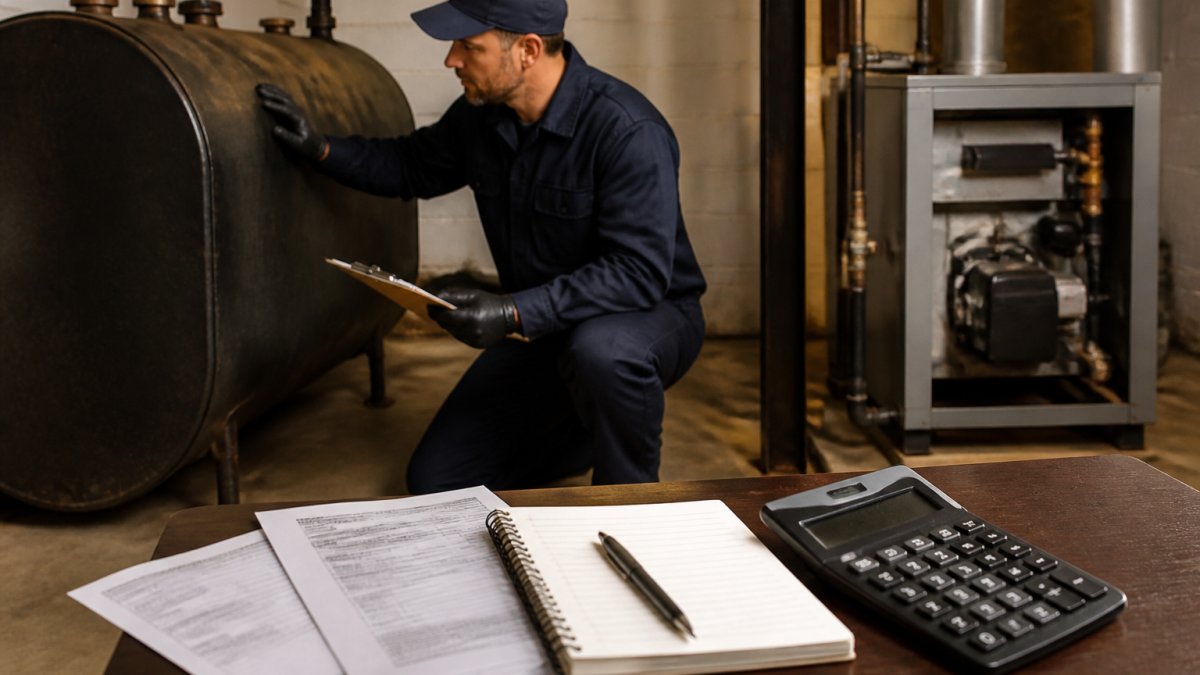
Tank work and disposal are the line items homeowners most often discover after signing. They are real costs and belong in the quote from the start.
Costs that frequently get missed:
- Oil tank inspection. An aging tank may need inspection or replacement, especially if it shows corrosion or weeping seams.
- Tank replacement or removal. If the tank is failing, it may need to be replaced or decommissioned.
- Environmental liability. A leaking underground tank can trigger cleanup obligations that go well beyond a furnace swap.
Ask your contractor to confirm in writing whether tank inspection, tank work, and disposal are included. A clear quote names these items upfront so nothing doubles the bill later.
Replacing an oil furnace is a significant decision, and the cost only makes sense when every line item is on the table before work begins. We are MA licensed, fully insured, and EPA 608 certified, and we stand behind our work. Request service with Whole Home Comfort Systems and get a clear, itemized quote for your oil furnace replacement.
Frequently Asked Questions
How much does a new oil furnace cost installed?
The installed price depends on the furnace size, efficiency rating, and whether your project includes tank work, ductwork changes, or a new chimney liner. A standard-efficiency unit with a straightforward swap costs less than a high-efficiency model that needs venting upgrades. Because every home is different, Whole Home Comfort Systems provides a clear written quote before work begins, so you know the full scope and price up front. Check the pricing page or request a quote for current numbers.
Is it worth replacing a 30-year-old furnace?
Most oil furnaces last 15 to 20 years, so a 30-year-old unit is well past its expected lifespan. At that age, parts become hard to find, the heat exchanger may be cracked, and efficiency has dropped significantly. A replacement typically lowers annual operating cost and removes the risk of a mid-winter breakdown. If your furnace needs frequent repairs or your fuel bills keep climbing, replacement usually makes more financial sense than another repair.
How does the AFUE rating affect long-term heating costs?
AFUE measures how much of the fuel your furnace converts into heat. An older unit may run around 70% AFUE, while new high-efficiency oil furnaces reach 85% or higher. The difference shows up in your annual fuel bill: a higher AFUE means less oil burned for the same warmth. For a homeowner in a cold climate, that gap can add up over a 15-year lifespan, which is why the efficiency rating matters as much as the upfront price.
Are oil furnaces being phased out?
Oil furnaces remain legal and widely used, especially in older homes across the Northeast. Some states and utilities offer rebates for switching to heat pumps or gas, and efficiency standards have tightened over time, but there is no nationwide ban. If your home already has oil infrastructure, replacing an aging furnace with a new high-efficiency oil model is often the simplest path. A conversion to gas or a heat pump is worth pricing if you want to compare long-term operating costs.
Need HVAC service in Mansfield, MA?