
7 Steps to Prepare an Oil Furnace for Winter
Last Updated: October 26, 2026
Quick Summary
To prepare oil furnace winter maintenance, schedule a professional tune-up, inspect and clean the burner nozzle, check fuel lines for leaks, test the ignition system, replace dirty filters, and verify safe operation before cold weather arrives.
- Schedule a professional tune-up every year before winter to catch problems early and ensure peak efficiency.
- Check your furnace air filter by holding it to light; replace it if you cannot see through it.
- Inspect fuel lines for drips, cracks, rust, and loose connections; call a professional immediately if leaks are found.
- Keep your heating oil tank at least half full before winter to prevent condensation and water contamination.
- Test your furnace by setting the thermostat to heat mode and listening for proper ignition and warm airflow from vents.
Table of Contents
- Why Preparing Your Oil Furnace Before Winter Matters
- Schedule a Professional Oil Furnace Tune-Up
- Complete Your Oil Furnace Maintenance Checklist
- Replace Your Oil Furnace Filter Before Winter
- Prepare Your Heating Oil Tank for Winter
- Test Your Furnace and Verify Safe Operation
- Schedule Your Winter Maintenance Appointment
- Frequently Asked Questions
Why Preparing Your Oil Furnace Before Winter Matters
Winter heating demands are coming. When temperatures drop, your oil furnace works hard to keep your home warm. But if you skip preparation, you risk breakdowns when you need heat most.
An unprepared furnace runs less efficiently. It burns more fuel. It's also more likely to fail during the coldest weeks of the year. A mid-winter breakdown means emergency repair costs and days without heat.
The good news: preparing your oil furnace for winter is straightforward. It doesn't require special skills. Most steps take just an afternoon.
This guide walks you through how to prepare oil furnace winter maintenance step by step. You'll learn what to check, when to call a professional, and how to avoid common mistakes. Follow these steps now, and your furnace will run reliably all season long.
Schedule a Professional Oil Furnace Tune-Up
Your oil furnace needs professional attention before winter. A tune-up catches problems early. It also ensures your system runs at peak efficiency.
A professional tune-up includes several critical checks:
- Inspecting the burner and nozzle for wear
- Testing the ignition system
- Checking fuel lines for leaks
- Cleaning internal components
- Verifying safe operation
Why hire a professional? Oil furnaces are complex systems. A trained technician knows what to look for. They have specialized tools. They can spot issues you'd miss. They also ensure your system meets safety standards.
Many homeowners ask: how often should I get a tune-up? The answer is simple. Schedule one every year before winter. This keeps your furnace running safely and efficiently.
The U.S. Department of Energy heating efficiency guide recommends annual maintenance for all heating systems. This prevents costly repairs later.
You can book a professional oil furnace tune-up to get your system inspected before the cold months arrive.
Complete Your Oil Furnace Maintenance Checklist
A maintenance checklist helps you prepare oil furnace winter tasks systematically. It ensures you don't miss any critical steps. Work through this checklist before winter arrives.
Inspect and clean the burner nozzle
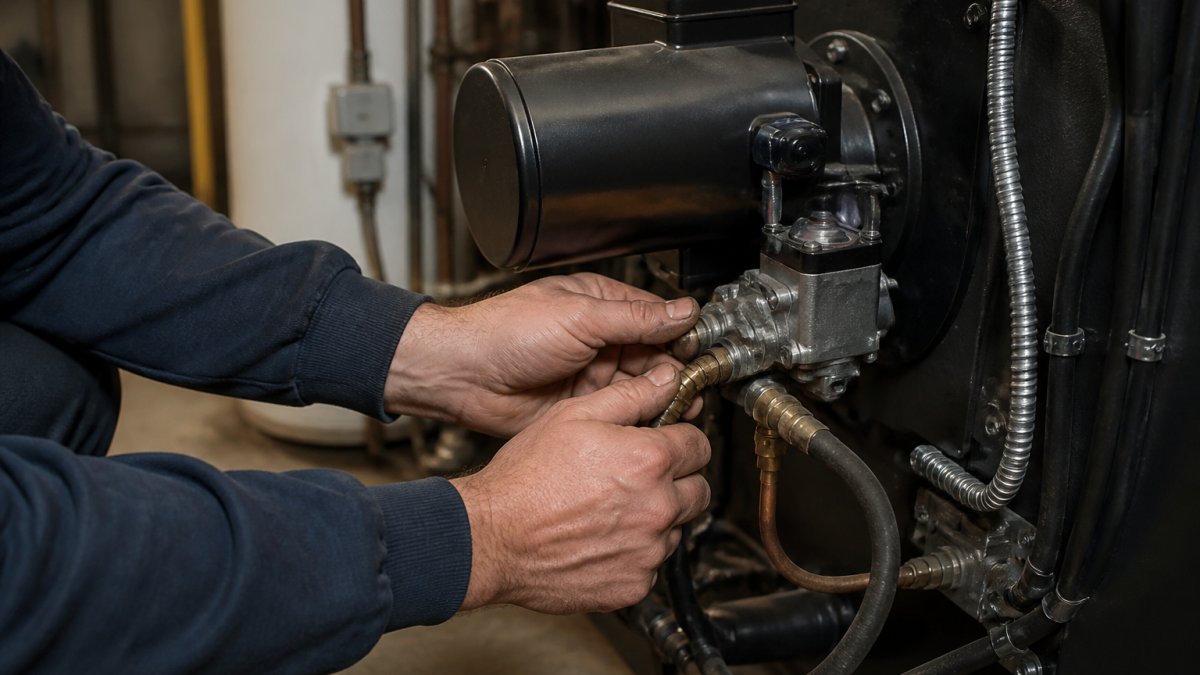
The burner nozzle sprays fuel into the combustion chamber. Over time, it accumulates deposits. These deposits reduce efficiency and can cause misfires.
Start by turning off your furnace. Wait for it to cool. Locate the nozzle inside the burner assembly. You may need to remove a cover to access it.
Look for visible deposits or discoloration. If the nozzle looks clogged, it needs cleaning. Use a soft brush or compressed air. Do not use harsh chemicals. Gently remove any buildup.
If the nozzle is damaged or cracked, it needs replacement. A damaged nozzle won't spray fuel properly. This causes poor combustion and wasted fuel.
Check fuel lines for leaks or corrosion
Fuel lines carry oil from your tank to the furnace. Over time, they can develop leaks or corrosion. Even small leaks waste fuel and create safety hazards.
Inspect all visible fuel lines. Look for:
- Drips or puddles below the lines
- Cracks or splits in the tubing
- Rust or discoloration on metal lines
- Loose connections at joints
If you spot a leak, stop using your furnace immediately. Call a professional. Do not attempt to repair fuel lines yourself. This is a safety issue.
Corrosion appears as rust or white deposits on metal lines. Light surface corrosion may not require immediate action. Heavy corrosion suggests the lines need replacement soon.
Test the ignition system
The ignition system lights your furnace. If it fails, your furnace won't start. Testing it now ensures it works when you need it.
Turn on your furnace. Listen for the ignition. You should hear a clicking sound followed by a whoosh as the burner lights.
If you hear clicking but no ignition, the system may have an issue. If there's no clicking at all, the ignition transformer may be faulty.
These issues require professional service. Do not attempt repairs yourself. Call a technician to diagnose and fix ignition problems.
Work through these key maintenance tasks to prepare your furnace for winter. Learn more about seasonal HVAC tune-ups and maintenance best practices to optimize your system's performance throughout the year.
| Task | What to Check | Action if Problem Found |
|---|---|---|
| Burner nozzle | Deposits or discoloration | Clean gently with soft brush or compressed air |
| Burner nozzle | Damage or cracks | Replace the nozzle |
| Fuel lines | Drips, cracks, rust, loose connections | Call a professional immediately |
| Ignition system | Clicking sound followed by whoosh | System working properly |
| Ignition system | Clicking but no ignition or no clicking | Call a technician for diagnosis |
| Air filter | Visibility through filter when held to light | Replace if dirty |
| Fuel filter | Clogged or dirty | Replace during professional tune-up |
Replace Your Oil Furnace Filter Before Winter
Your furnace has an air filter. This filter traps dust and debris. A dirty filter reduces airflow. Your furnace works harder and uses more fuel.
Check your filter now. Hold it up to a light. Can you see through it? If not, it's dirty and needs replacement.
Replacement filters are inexpensive. They cost just a few dollars. Installing one takes five minutes.
Here's how to replace it:
- Turn off your furnace
- Locate the filter housing (usually near the blower)
- Note the filter size printed on the frame
- Remove the old filter
- Insert the new filter (arrow pointing toward the furnace)
- Close the housing
- Turn the furnace back on
Mark your calendar to check the filter again in three months. In winter, you may need to replace it more often due to heavy use.
A clean filter improves efficiency. It also extends your furnace's lifespan. This simple step pays for itself in fuel savings.
Prepare Your Heating Oil Tank for Winter
Your oil tank needs attention too. A well-maintained tank ensures a steady fuel supply all winter.
Start by checking the tank level. You want it at least half full before winter. A full tank prevents condensation inside the tank, which can lead to water contamination.
If your tank is low, schedule a fuel delivery now. Don't wait until the coldest weeks. Delivery times can get backed up, and you could run out of fuel.
Inspect the tank exterior for rust or damage. Look for:
- Cracks or holes
- Severe rust or corrosion
- Loose or damaged straps
- Leaking fuel
Small surface rust is normal. Heavy rust or visible damage means the tank needs professional attention.
Check your fuel filter. This is different from your furnace filter. The fuel filter sits between your tank and furnace. It catches debris in the oil.
If your fuel filter is clogged, oil won't flow properly. Your furnace may shut down or run poorly. Replace it if it's dirty.
Many homeowners don't know they have a fuel filter. Ask a technician to show you where it is. They can replace it during your tune-up.
Test Your Furnace and Verify Safe Operation
Before winter arrives, run a full test of your furnace. This confirms everything works correctly.
Set your thermostat to heat mode. Raise the temperature a few degrees above the current room temperature. Your furnace should start within a minute.
Listen and watch. You should hear the blower kick in. Warm air should flow from your vents. The system should run smoothly without unusual noises.
Unusual sounds mean something's wrong. Common warning signs include:
- Loud banging or clanging
- High-pitched squealing
- Grinding or scraping sounds
- Frequent on-and-off cycling
If you hear any of these, stop the test. Call a professional. These sounds indicate mechanical problems that need repair.
Check your thermostat. Does it respond quickly? Does the furnace shut off when the room reaches the set temperature? Proper operation means smooth cycling on and off.
Feel the air coming from your vents. It should be warm but not scorching. If the air is barely warm, your furnace may not be burning fuel efficiently.
Test your safety controls. Your furnace has a limit switch that shuts it down if it overheats. A professional tests this during a tune-up. You shouldn't attempt this yourself.
The EPA's guide to home heating safety outlines key safety checks for oil heating systems. Review these standards to understand what a safe system looks like.
Schedule Your Winter Maintenance Appointment
Now is the time to call a professional. Don't wait until December when temperatures drop and technicians are booked solid.
A professional tune-up is the best investment you can make in your furnace. A technician will do what you can't:
- Perform a complete combustion analysis
- Test all safety controls
- Clean internal components thoroughly
- Identify worn parts before they fail
- Ensure your system meets all safety codes
The appointment takes about an hour. The technician will review their findings with you. They'll recommend any repairs or replacements needed.
The National Oil Heat Research Alliance recommendations for annual maintenance emphasize the importance of professional service. Annual tune-ups prevent 80% of heating system failures.
You can learn more about what a professional safety inspection includes to understand the full scope of professional maintenance. This helps you know what to expect during your appointment.
We can schedule your oil furnace tune-up before winter rush. Our technicians are EPA 608 certified and oil burner licensed. We've served the South Shore for over 20 years.
Frequently Asked Questions
How do I prepare an oil furnace for winter on my own?
Start by replacing the filter, checking fuel lines for leaks, and ensuring the thermostat works properly. However, professional cleaning of the burner nozzle, combustion chamber, and heat exchanger requires specialized equipment and certification. Schedule a technician visit before November to avoid the winter rush.
When should I have my oil furnace serviced before winter?
Schedule your oil furnace tune-up in September or October, before heating season begins and before technicians become fully booked. This timing ensures any repairs or replacements are completed before the first cold snap. If you wait until November or December, you risk longer wait times and emergency service calls if problems develop.
Should I replace my oil furnace filter before winter?
Yes. A clean filter is essential for efficient operation and prevents dust and debris from clogging the burner nozzle. Replace the filter as part of your pre-winter preparation, and check it monthly during heating season. A clogged filter forces your furnace to work harder, reducing efficiency and increasing fuel costs.
What do I need to do to prepare my heating oil tank for winter?
Fill your tank before winter arrives so you don't run out during cold weather. Check for rust, leaks, or corrosion on the tank and fuel lines. Ensure the fill cap is secure and the vent is clear of debris. Consider having the tank inspected by a technician if it hasn't been serviced in several years, as sediment buildup can damage your furnace.
Winter heating demands arrive fast. An unprepared furnace fails when you need it most. Start your preparation now. Follow this checklist. Call a professional for the work you can't do yourself. Get in touch with us to schedule your winter maintenance appointment and ensure your furnace runs reliably all season long.

Need HVAC service in Mansfield, MA?